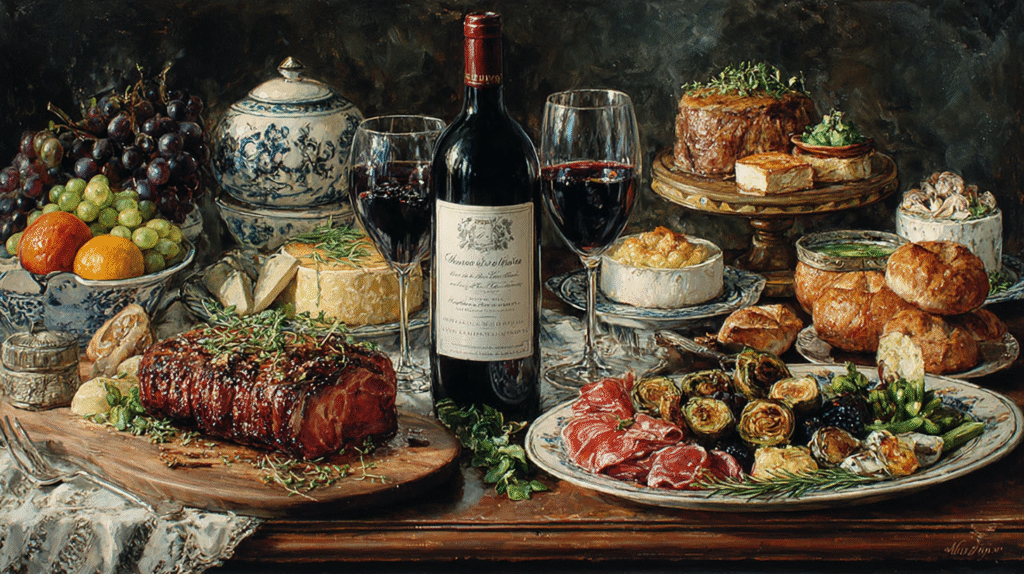
Cabernet Sauvignon is one of the most influential and widely celebrated red grape varieties in the world. Its combination of structure, depth, and longevity has made it the backbone of many of the greatest wines ever produced, from the gravelly vineyards of Bordeaux to the sun-drenched valleys of California, the coastal hills of Tuscany, and the high-altitude sites of South America. This report explores Cabernet Sauvignon in its global context, examining how different climates, soils, and winemaking philosophies shape its character while providing a clear, comprehensive guide to the regions, styles, and sensory traits that define this iconic variety.
Cabernet Sauvignon
A global overview of history, terroir, viticulture, sensory identity, and regional expressions
1. Historical Overview
Cabernet Sauvignon originated in Bordeaux in the seventeenth century as a natural crossing of Cabernet Franc and Sauvignon Blanc. Its thick skins, disease resistance, and ability to thrive in varied climates helped it become one of the world’s dominant red grape varieties. On the Left Bank of Bordeaux, especially in the Médoc and Graves, gravel soils and maritime influences allowed Cabernet Sauvignon to ripen reliably while maintaining structure and freshness.
As wine culture expanded, Cabernet Sauvignon spread to nearly every major wine-producing nation. Its adaptability, recognizable flavor profile, and affinity for oak made it the backbone of many of the world’s most important red wines, including those from Napa Valley, Coonawarra, Tuscany, Chile, Washington State, and South Africa.
2. Viticultural Notes
Grape Characteristics
- Thick-skinned berries that produce deep color and firm tannins
- Late-ripening variety that favors warm, sunny climates
- Naturally high tannin with moderate to high acidity
- Aromatic and structural profile strongly influenced by soil, climate, and winemaking
Viticultural Practices
- Low to moderate yields to enhance concentration and depth
- Careful canopy management to achieve phenolic ripeness and fine-grained tannins
- Frequent use of French and/or American oak for maturation, adding spice, vanilla, and structure
- Extended maceration or barrel fermentation used by some producers for complexity and texture
- Commonly blended with Merlot, Cabernet Franc, Malbec, and Petit Verdot to refine texture and aromatics
3. Global Regional & Terroir Mapping
Bordeaux, France (Benchmark Old World Expression)
Left Bank (Médoc, Graves)
Climate: Maritime, with warm summers and cooling Atlantic breezes.
Soils: Gravel over clay and sand, offering excellent drainage and heat retention.
Style:
- Blackcurrant (cassis), graphite, cedar, and tobacco
- Firm, structured tannins and moderate alcohol
- Savory, restrained fruit profile with notable aging potential
Key Appellations: Pauillac, Margaux, Saint-Julien, Saint-Estèphe, Pessac-Léognan.
Right Bank (Blends with Merlot)
While Merlot often dominates on the Right Bank, Cabernet Sauvignon and Cabernet Franc play important roles in certain blends from areas such as Fronsac, Castillon, and parts of Saint-Émilion, adding structure, dark fruit, and longevity.
Napa Valley, California (Modern Icon)
Climate: Warm Mediterranean with varied microclimates influenced by elevation and proximity to the bay.
Soils: Volcanic ash, gravel, loam, and alluvial fans.
Style:
- Ripe blackberry, plum, and cassis with generous concentration
- Full-bodied, with plush tannins and higher alcohol
- Pronounced oak signatures of vanilla, cocoa, baking spice, and toast
- Velvety texture and youthful opulence, often with long aging potential
Key Sub-AVAs: Oakville, Rutherford, Stags Leap District, Howell Mountain, Spring Mountain, Atlas Peak, Calistoga.
Sonoma County, California
Cooler and more coastal than much of Napa, Sonoma produces Cabernet Sauvignon with a slightly more restrained profile.
Style:
- Red and black fruits with balanced acidity
- Cedar, bay leaf, and subtle herbal notes
- Dusty, fine-grained tannins and slightly leaner structure than many Napa counterparts
Key Areas: Alexander Valley, Knights Valley, Sonoma Mountain.
Washington State (Walla Walla, Red Mountain, Yakima)
Climate: Continental with hot summer days and cool nights.
Soils: Basalt, loess, gravel, and alluvial deposits.
Style:
- Intense black fruit (blackberry, black cherry) with bright acidity
- Firm but polished tannins
- Herbal and savory tones such as graphite, black olive, and dried herbs
- Often stylistically between Bordeaux restraint and California richness
Tuscany, Italy (Super Tuscans and Blends)
Climate: Warm Mediterranean with coastal influences and varied elevations.
Soils: Galestro (friable schist), sandstone, clay, and marine deposits.
Style:
- Dark cherry, plum, and blackcurrant
- Notes of dried herbs, Mediterranean scrub, and subtle spice
- Firm tannins, moderate acidity, and a slightly savory finish
- Frequently blended with Sangiovese, Merlot, or other Bordeaux varieties under Toscana IGT or Bolgheri DOC
Chile (Maipo Valley, Colchagua, Aconcagua)
Climate: Mediterranean with strong Andean and coastal influences.
Soils: Alluvial, gravel, and colluvial soils with good drainage.
Style:
- Blackcurrant, blackberry, and plum
- Distinctive mint or eucalyptus notes in many Maipo wines
- Medium to full body with polished, approachable tannins
- Consistent quality with excellent value at many price points
Maipo Alto is especially renowned for elegant, finely structured Cabernet Sauvignon.
Argentina (Mendoza, Uco Valley)
High-altitude vineyards in Mendoza and the Uco Valley give Cabernet Sauvignon freshness and intensity alongside power.
Style:
- Black cherry, cassis, and dark plum
- Dried herbs, graphite, and subtle mineral notes
- Firm yet ripe tannins and good acidity
- Often less opulent than Malbec, with more linear structure
Australia (Coonawarra, Margaret River)
Coonawarra
Soils: Famous “terra rossa” (red clay over limestone).
Style:
- Cassis, black cherry, and distinctive mint or eucalyptus
- Medium to full body with fine, firm tannins
- Balanced structure and strong aging potential
Margaret River
Climate: Maritime, moderated by Indian Ocean influences.
Style:
- Blackberry, blackcurrant, and cocoa
- Bay leaf, cedar, and subtle herbal notes
- Bordeaux-like structure with New World fruit ripeness
South Africa (Stellenbosch and Surrounding Regions)
Style:
- Black fruit, tobacco leaf, and graphite
- Firm, savory tannins with a slightly earthy edge
- Often tastes like a midpoint between Bordeaux and warmer New World regions
4. Top Producers (Global Benchmarks)
Bordeaux
- Château Lafite Rothschild
- Château Latour
- Château Margaux
- Château Mouton Rothschild
- Château Pichon Longueville Comtesse de Lalande
Napa & Sonoma
- Opus One
- Screaming Eagle
- Harlan Estate
- Stag’s Leap Wine Cellars
- Silver Oak
- Jordan Vineyard & Winery (Sonoma)
- Ridge Vineyards (notably Monte Bello, Santa Cruz Mountains, and Sonoma sources)
International
- Penfolds (Australia)
- Marchesi Antinori (Italy, including Tignanello and other Super Tuscans)
- Concha y Toro “Don Melchor” (Chile)
5. Flavor Profile Analysis
ABV (Alcohol by Volume)
- Old World regions: generally 12.5 to 14 percent
- New World regions: commonly 14 to 15.5 percent
Acidity
Medium to medium-high, with cooler climates such as Bordeaux, Washington, and Margaret River tending to show more prominent acidity.
Tannins
Naturally robust and structured, often forming a key part of the wine’s identity and aging potential. Fine-grained tannins develop with time in bottle.
Nose (Aromas)
- Blackcurrant (cassis), blackberry, and dark cherry
- Cedar, pencil shavings, tobacco, and cigar box
- Violet, dried herbs, and sometimes eucalyptus or mint
- Vanilla, cocoa, clove, and toast from oak influence
Palate (Taste & Mouthfeel)
- Concentrated dark fruit with layers of cassis, plum, and black cherry
- Structural tannins, often firm in youth but capable of integration over time
- Graphite, mineral, and savory notes, especially in Old World styles
- Oak-derived elements such as chocolate, baking spices, and roasted coffee in many New World wines
Finish
Typically long, dry, and complex, with lingering flavors of dark fruit, cedar, graphite, and subtle spice.
6. Food Pairing Recommendations
Charcuterie & Cheese
- Aged cheddar, aged Gouda, Comté, and other firm, nutty cheeses
- Cured meats such as bresaola, prosciutto, and dry salami
- Roasted or spiced nuts
- Black olive tapenade, roasted red peppers, and sun-dried tomatoes
Appetizers
- Beef carpaccio with Parmesan and arugula
- Mushroom crostini with garlic and herbs
- Duck pâté or terrine
- Grilled vegetable skewers with rosemary and thyme
Entrées
Beef
- Ribeye, strip steak, or T-bone grilled or pan-seared
- Prime rib with herb crust
- Beef short ribs or braised beef dishes
- Gourmet burgers with aged cheese and caramelized onions
Lamb
- Herb-crusted rack of lamb
- Braised lamb shanks
- Lamb chops with rosemary and garlic
Game
- Venison, wild boar, or elk with red wine reductions
- Roasted game birds with pepper-based sauces
Vegetarian & Vegan
- Mushroom bourguignon or red wine mushroom stew
- Lentil stew with root vegetables and herbs
- Grilled portobello mushrooms with rosemary and olive oil
- Roasted eggplant or stuffed peppers with herb-rich fillings
Side Dishes
- Potatoes gratin or roasted potatoes with herbs
- Roasted root vegetables (carrots, parsnips, beets)
- Creamed spinach or sautéed greens
- Polenta with mushrooms and Parmesan
7. Contextual Comparison
Among the noble red varieties, Cabernet Sauvignon is one of the most structured and powerful. Compared with Syrah, it is typically less peppery and more focused on cassis, cedar, and graphite. Compared with Merlot, it has firmer tannins and a more linear, architectural profile. Compared with Pinot Noir, it is far fuller-bodied and more robust, with greater emphasis on structure and longevity. Its global success reflects a rare balance of fruit, tannin, and recognizable character across many terroirs.
8. Serving & Storage Recommendations
Serving Temperature
Ideal serving range is 60 to 65°F (15 to 18°C). Cooler service emphasizes structure and freshness; slightly warmer service highlights richness and texture.
Glassware
Use a large Bordeaux-style bowl to showcase aromatics and allow the wine to soften and open with air.
Decanting
- Young Cabernet Sauvignon: 1 to 2 hours in a decanter helps soften tannins and unlock aromatics.
- Mature bottles: use a gentle splash decant primarily to remove sediment, avoiding extended exposure to air.
Cellaring
- Bordeaux (classified growths): often 10 to 30+ years, depending on vintage and château.
- Napa Valley: typically 8 to 20 years, sometimes longer for top cuvées.
- Australia (Coonawarra, Margaret River): frequently 10 to 25 years.
- Chile & South Africa: many top examples age well for 5 to 12 years or more.
Store at around 55°F (13°C) with stable humidity, minimal light, and little vibration, keeping bottles on their sides to maintain cork integrity.
9. Label & Classification Interpretation
- Bordeaux: uses AOC appellations (such as Pauillac or Margaux) and, on the Left Bank, the 1855 classification (First Growths, Second Growths, etc.), plus categories like Cru Bourgeois. Labels emphasize château name and appellation rather than grape variety, though Cabernet Sauvignon is typically the dominant grape in many Left Bank wines.
- Italy (Tuscany): Cabernet Sauvignon often appears in blends labeled as Toscana IGT or under Bolgheri DOC and other regional designations, sometimes alongside Sangiovese and Merlot.
- New World (United States, Chile, Australia, South Africa, Argentina): wines are commonly labeled varietally as “Cabernet Sauvignon,” often with AVA, DO, or GI indications (for example, Napa Valley AVA, Maipo Valley DO, Coonawarra GI) to signal regional origin.
10. Awards, Ratings & Vintage Considerations
Cabernet Sauvignon dominates many of the world’s most celebrated vintages and highly rated wines. In Bordeaux, landmark vintages include 2000, 2005, 2009, 2010, 2016, 2018, 2019, and 2020. In Napa Valley, standout years such as 2012, 2013, 2016, 2018, and 2019 have earned strong praise for balance and longevity. Top Cabernet-based wines consistently receive high scores from major critics and publications, reflecting both intrinsic quality and global demand.
11. Market Position & Pricing
Cabernet Sauvignon spans the full range of the market, from everyday drinking wines to some of the most expensive and collectible bottles in the world.
- Entry-level: widely available from Chile, South Africa, broader California regions, and many emerging producers.
- Premium tier: includes many wines from Napa Valley, Bolgheri, Coonawarra, Margaret River, Stellenbosch, and high-elevation regions of Argentina.
- Ultra-premium and luxury: First Growth Bordeaux, top classified growths, cult Napa wines, and flagship bottlings from Australia and Italy.
Limited production from prestigious sites, long barrel and bottle aging, and high global demand all contribute to Cabernet Sauvignon’s prominent market position.
12. Winemaker Philosophy & House Styles
Winemaking approaches for Cabernet Sauvignon vary widely by region and producer. In Bordeaux, the emphasis is often on blending and structure, using Cabernet Sauvignon as the backbone of wines designed for long-term aging. In Napa and other New World regions, many producers highlight ripe fruit, generous extraction, and notable new oak influence, though there is a growing trend toward fresher, more balanced styles.
In Tuscany, Cabernet Sauvignon is used both as a blending partner and as a varietal component in wines that bridge Old World structure and New World ripeness. In Australia and South America, stylistic choices range from restrained, savory expressions to rich, powerful, fruit-forward wines. Across the globe, house style reflects decisions about harvest timing, extraction, oak regime, and the degree to which winemakers prioritize power versus elegance.
13. Sustainability & Ethical Practices
Many key Cabernet Sauvignon regions are at the forefront of sustainable and environmentally conscious viticulture. In Napa Valley, organic, biodynamic, and regenerative farming practices are increasingly common, with attention to soil health, biodiversity, and water conservation. In Bordeaux, more estates are pursuing environmental certifications such as Haute Valeur Environnementale (HVE) and converting to organic or biodynamic farming.
In Australia, Chile, South Africa, and other New World regions, sustainability initiatives often focus on water management, erosion control, integrated pest management, and protecting native ecosystems. Across the Cabernet spectrum, there is a growing recognition that long-term vineyard health and environmental stewardship are integral to both quality and authenticity.