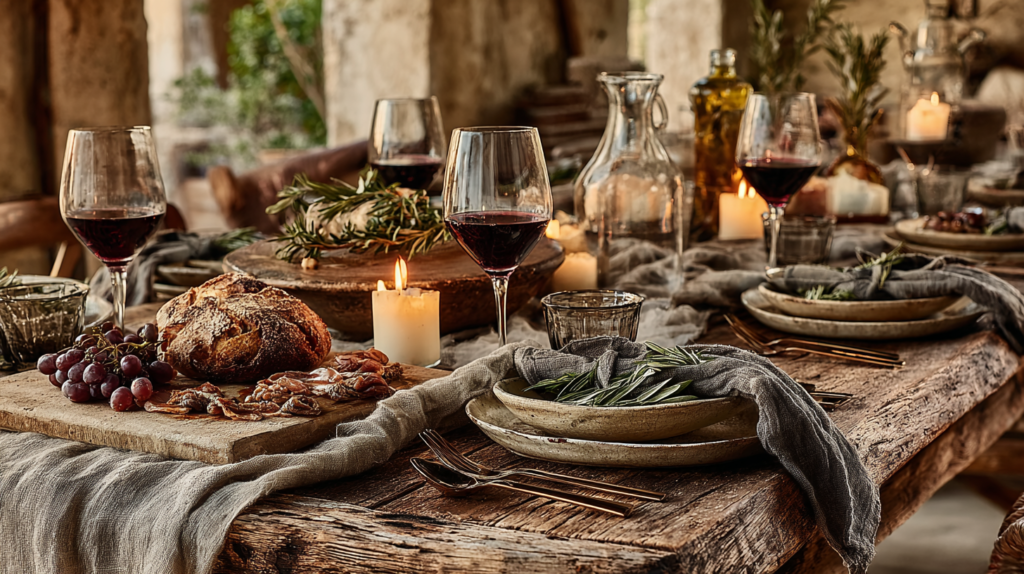
Sangiovese is Italy’s most emblematic red grape—bright, savory, and profoundly food-friendly. Best known as the backbone of Tuscany’s great wines (from everyday Chianti to age-worthy Brunello), it’s prized for its high acidity, cherry-and-herb aromatics, and its rare ability to translate place into flavor. Depending on site, clone, and élevage, Sangiovese can read as rustic and earthy, sleek and floral, or powerful and long-lived—always with a spine of freshness that keeps it lively at the table.
1. History & Origin
Sangiovese is deeply rooted in central Italy, with its modern identity most closely tied to Tuscany. The grape’s name is often linked to “Sanguis Jovis” (“blood of Jupiter”), reflecting its long cultural association with the Italian peninsula. Over centuries, local selection created a family of clones and biotypes, which helps explain why the grape can look and taste notably different from one Tuscan hillside to the next.
In the late 20th century, quality rose sharply as producers improved clonal material, reduced yields, refined harvest decisions, and modernized cellar work. This period also saw the rise of “Super Tuscan” bottlings (often labeled IGT) that showcased Sangiovese in innovative blends or single-varietal forms outside strict DOCG rules.
2. Viticultural & Production Notes
Sangiovese is a late-ripening variety that rewards precision. It is especially sensitive to crop load and harvest timing: pick too early and it can be tart and herbal; too late and it can lose aromatic definition and freshness.
Viticulture Highlights
- Ripening: Late; demands a long, even growing season.
- Yield sensitivity: Quality improves dramatically with controlled yields and canopy management.
- Skins & color: Relatively thin-skinned; often medium color intensity despite serious structure.
- Acid retention: Naturally high acidity is a signature trait and key to food pairing and aging.
Common Winemaking Pathways
- Fermentation: Typically stainless steel or concrete; moderate-to-long macerations to build structure.
- Extraction choices: From gentle (for perfume and finesse) to firm (for age-worthy structure).
- Oak regime: Traditionalists favor large neutral casks (botti) for savory clarity; modernists may use barriques (new or partially new) for roundness, sweetness of spice, and earlier approachability.
- Blending decisions: Vary by appellation—some require high or total Sangiovese; IGT wines may include other varieties.
Distinctive Qualities from Production
- High-toned aromatics (cherry, violet, herbs) are preserved by cooler fermentations and restrained oak.
- Firm, “grippy” tannin texture can be polished via élevage and bottle age.
- Savory complexity (tea, leather, tobacco, earth) increases with time and traditional maturation.
3. Regional & Terroir Identity
Sangiovese is terroir-transparent: it readily shows soil, elevation, and exposure. Tuscany’s classic soil types—often cited as galestro (schist-like marl) and alberese (limestone-rich rock)—tend to encourage aromatic lift, structural tension, and savory nuance.
Key Italian Expressions
- Chianti / Chianti Classico (Tuscany): Bright sour cherry, violet, dried herbs, and a savory finish; generally medium body with high acidity.
- Brunello di Montalcino (Tuscany): 100% Sangiovese (locally “Brunello”); deeper structure, darker cherry, earthy complexity, and long aging potential.
- Vino Nobile di Montepulciano (Tuscany): Elegant, earthy-red-fruited styles with refined tannins (note: “Montepulciano” here refers to the town, not the grape).
- Morellino di Scansano (Coastal Tuscany): Riper, more generous fruit and softer edges from warmer coastal influence.
- Romagna Sangiovese (Emilia-Romagna): Often savory, structured, and rustic-leaning, with bright red fruit and earth.
Notable New World Regions
- California (esp. Sierra Foothills, Central Coast pockets): Riper cherry/raspberry, sometimes plusher texture.
- Australia: Often bright, spicy, and medium-bodied, with a modern “fresh red” profile.
- Argentina/Chile (select sites): Red-fruit-driven, with a balance depending on altitude and cooling influences.
4. Top Producers / Benchmark Bottlings
Below are widely regarded benchmark names for Sangiovese-driven wines (especially Tuscany), spanning traditional and modern interpretations:
- Biondi-Santi (Brunello) – historic, traditional, age-worthy structure
- Conti Costanti (Brunello) – classic, savory, built for longevity
- Il Poggione (Brunello) – powerful, dependable, cellar-friendly
- Casanova di Neri (Brunello) – polished power with site expression
- Castello di Ama (Chianti Classico) – refined, aromatic, terroir-driven
- Fontodi (Chianti Classico/IGT) – structured, concentrated, often organic-minded
- Fèlsina (Chianti Classico) – savory tradition with modern precision
- Montevertine (Tuscany) – cult classic; elegant, Sangiovese-centric identity
- Antinori (Tuscany) – influential house with both classic and innovative expressions
- Avignonesi (Vino Nobile) – often associated with biodynamic, textural elegance
5. Flavor Profile Analysis
ABV
Typically 12.5% to 14.5% ABV, depending on region, vintage warmth, and style.
Acidity
High acidity is a hallmark—driving freshness, food compatibility, and age-worthiness.
Residual Sugar
Usually dry (minimal residual sugar), though perceived sweetness can come from ripe fruit and oak spice.
Tannins
Medium to high, often with a firm, slightly “dusty” or tea-like grip, especially in more traditional styles.
Nose (Aromas)
- Fruity: sour cherry, marasca cherry, red plum, cranberry
- Floral: violet, dried rose (more common with age)
- Herbal/Vegetal: oregano, thyme, tomato leaf, dried rosemary
- Spice: anise, clove, subtle pepper (oak-dependent)
- Earthy/Savory: leather, black tea, dried mushroom, tobacco
Palate
- Medium-bodied core with a bright, linear “spine” of acidity
- Red-fruited entry that turns savory (herbs, earth, tea) mid-palate
- Oak can add vanilla, cedar, and sweeter spice; large cask elevage keeps it more herbal and mineral
Finish
Medium to long finish, typically cherry-skin, herbal, and sometimes subtly saline, with tannins that taper rather than abruptly stop.
6. Food Pairing Recommendations
A. Charcuterie
Cheeses (best matches first):
- Pecorino Toscano (young to semi-aged)
- Parmigiano-Reggiano
- Grana Padano
- Robiola (for brighter, younger styles)
- Aged sheep’s milk cheeses with herbal rind
Cured Meats:
- Prosciutto di Parma
- Finocchiona (fennel salami)
- Capocollo
- Soppressata (not too spicy)
Nuts:
- Roasted almonds
- Walnuts (excellent with aged cheeses)
- Hazelnuts
Pepper/Accent Elements:
- Cracked black pepper on pecorino
- Calabrian chili honey (use lightly)
- Olive tapenade or herb-forward spreads
B. Appetizers
- Bruschetta with tomato, basil, and olive oil
- Crostini with chicken liver pâté (classic Tuscan match)
- Mushroom crostini or porcini arancini
- Caprese salad (best with youthful, fresher styles)
- White bean soup or ribollita
C. Entrées
Meat (Top Category)
- Pasta al ragù (beef, boar, or lamb)
- Osso buco (tomato-forward versions pair especially well)
- Grilled lamb chops with rosemary
- Pork shoulder or porchetta with fennel and herbs
- Bistecca alla Fiorentina (especially with structured Chianti Classico or Brunello)
Seafood
- Tomato-based seafood pasta (cioppino-style, seafood sugo)
- Grilled tuna with olive caper relish
Vegetarian
- Eggplant Parmigiana
- Mushroom risotto (porcini)
- Tomato-braised lentils with herbs
- Roasted squash with sage and browned butter (oak-aged styles do best)
Vegan
- Pasta with tomato, olives, capers, and oregano (puttanesca-adjacent)
- Grilled eggplant with tahini-lemon herb sauce
- White bean and rosemary stew
D. Side Dishes
- Roasted potatoes with rosemary and garlic
- Polenta with wild mushrooms
- Charred broccolini with chili flakes
- Arugula salad with lemon and shaved hard cheese
- Tomato-braised greens (kale/chard) with olive oil
7. Contextual Comparison
- Versus Nebbiolo: Sangiovese typically offers less tar-and-rose intensity and slightly softer tannin severity, with more immediate red-fruit charm.
- Versus Pinot Noir: Similar transparency and red-fruit range, but Sangiovese is usually more savory-herbal with a firmer acid line.
- Versus Cabernet Sauvignon: Generally lighter in body and less black-fruited, but often more naturally suited to tomato- and herb-driven cuisines.
8. Serving & Storage Recommendations
Temperature
- Young / fresh styles: 58–62°F (14–17°C)
- Structured / aged styles: 62–66°F (17–19°C)
Glassware
- All-purpose red wine glass (great for Chianti)
- Burgundy-style bowl (helpful for aromatics in premium expressions)
Decanting
- Everyday Chianti: optional, 15–30 minutes to soften and open aromatics
- Brunello / age-worthy bottlings: 1–2 hours (or slow-ox in bottle for older vintages)
Optimal Drinking Window
- Entry-level Chianti: ~2–5 years from vintage
- Chianti Classico / better bottlings: ~5–12+ years
- Brunello di Montalcino: ~10–30+ years (depending on producer and vintage)
Cellaring Conditions
- 55°F / 13°C, consistent temperature
- Dark storage, moderate humidity, bottles on their side (for cork closures)
9. Label & Classification Interpretation
- DOCG: Italy’s top regulatory tier (e.g., Chianti Classico DOCG, Brunello di Montalcino DOCG).
- Riserva: Longer minimum aging than the base wine (rules vary by appellation).
- Gran Selezione (Chianti Classico): A top-tier category with stricter sourcing/aging requirements than annata.
- IGT Toscana: More flexibility (often where Super Tuscans appear; can be blends or varietal Sangiovese).
- Classico: Typically indicates the historic core zone of an appellation (not “classic style”).
10. Awards, Ratings & Vintage Notes
Premium Sangiovese-based wines—especially top Chianti Classico and Brunello—are frequently reviewed by major critics and can achieve elite scores in strong years. More important than any single score is understanding producer style and vintage character, since the grape is sensitive to weather and harvest decisions.
General vintage guidance (Tuscany): Sangiovese tends to excel in seasons that allow full phenolic ripeness without sacrificing acidity—often warm-but-not-hot years and sites with cooling night temperatures.
11. Market Position & Pricing Tier
- Entry-level: ~$12–25 (fresh Chianti, everyday Sangiovese blends)
- Premium: ~$25–70 (better Chianti Classico, single-vineyard selections, quality IGT)
- Ultra-premium: ~$60–200+ (Brunello, iconic estates, top single-vineyard bottlings)
Value angle: One of the best “serious wine” values for food pairing and cellar potential, often delivering complexity at prices below similarly age-worthy styles from many prestige regions.
12. Winemaking Philosophy & House Style
Producer philosophy is a major driver of how Sangiovese tastes:
- Traditional: large neutral casks, savory structure, more angular youth, long aging curve
- Modern: smaller oak, rounder texture, riper fruit impression, earlier accessibility
- Terroir-first: restrained oak, parcel selection, and minimal makeup to let site speak
Across styles, the most compelling examples maintain a balance of fruit, acid, and tannin—never letting oak sweetness or over-ripeness blur the grape’s signature clarity.
13. Sustainability & Ethical Practices
Many leading Sangiovese estates increasingly emphasize sustainable farming, with a notable presence of certified organic and biodynamic practices in Tuscany. Common initiatives include reduced chemical inputs, cover crops for soil health, biodiversity corridors, and careful water stewardship.
When shopping, look for certifications (organic/biodynamic/sustainable) and producer transparency about farming and cellar inputs if these values are important to you.