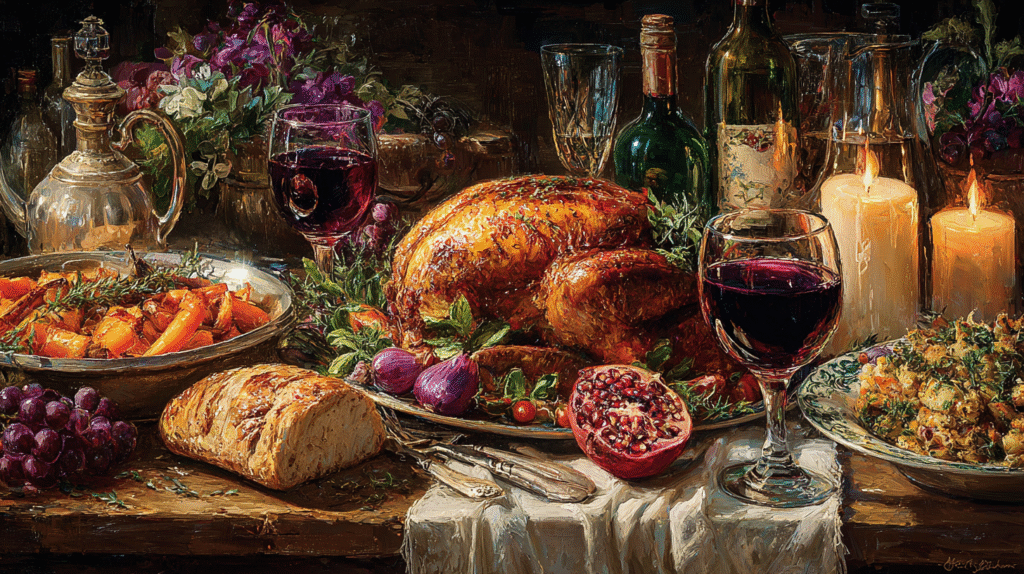
Syrah and Rhône-style blends offer some of the most expressive, versatile, and seasonally comforting red wines in the world. Rooted in centuries of tradition from France’s Northern and Southern Rhône valleys, these wines balance dark fruit depth with savory complexity, peppery spice, and a natural affinity for cool-weather cuisine. Whether vinified as pure Syrah or blended with Grenache and Mourvèdre in the classic GSM style, they deliver a combination of richness, structure, and aromatic lift that makes them ideal for fall, winter, and hearty meals throughout the year.
While Syrah’s spiritual home is the steep, windswept hillsides of the Northern Rhône, the grape has adapted beautifully across the globe, inspiring distinctive interpretations in California, Washington, and Australia. Rhône-style blends have likewise flourished beyond France, offering a range of expressions that highlight each region’s climate, soils, and winemaking philosophy. This article explores the essential characteristics of Syrah and GSM blends, from their origins and terroirs to their flavor profiles, top producers, and ideal food pairings.
Syrah & Rhône-Style Blends (GSM)
A complete sommelier-level analysis of Syrah and Grenache–Syrah–Mourvèdre blends
1. Historical Overview
Syrah’s origins trace to the Northern Rhône in France, where it has been cultivated for centuries and forms the backbone of appellations such as Côte-Rôtie, Hermitage, Cornas, Crozes-Hermitage, and Saint-Joseph. Steep granite vineyards, river-influenced breezes, and meticulous hillside farming established Syrah as one of the world’s most expressive and age-worthy red varieties.
Rhône-style blends, centered on Grenache, Syrah, and Mourvèdre (often abbreviated as GSM), found their fullest expression in the Southern Rhône, particularly in regions like Châteauneuf-du-Pape, Gigondas, and Vacqueyras. These blends have since been embraced across California, Washington, Australia, and South Africa, where producers reinterpret the style through local climate, soils, and winemaking philosophies.
2. Viticultural Notes
Grape Characteristics
Syrah
- Thick-skinned grape capable of producing deep color and firm tannins
- Naturally spicy, with aromas of black pepper, violets, and dark fruit
- Highly sensitive to climate: cooler areas give leaner, peppery wines; warmer zones yield richer, more opulent profiles
Grenache
- High sugar potential with medium tannins and lifted red fruit
- Shows warm spice and often a slightly herbal character
- Thrives in heat and well-drained, rocky soils
Mourvèdre
- Late-ripening and demanding of warmth and sunlight
- Brings structure, savory depth, and meaty, earthy notes
- Enhances ageability and backbone in blends
Key Viticultural Practices
- Low yields favored for concentration and intensity
- Hand harvesting common in steep or rocky sites, especially in the Northern Rhône
- Syrah often trellised to manage vigor, canopy, and sunshine exposure for optimal phenolic ripeness
- Grenache frequently grown as bush vines in old, dry-farmed vineyards
- Co-fermentation with small amounts of Viognier (Northern Rhône tradition) to add aromatic lift and stabilize color
3. Regional & Terroir Profiles
Northern Rhône (France) – 100% Syrah
Climate: Continental, with significant wind, river influence, and elevation.
Soils: Granite, schist, mica, and limestone.
Wine Identity:
- Black pepper, violet, olive tapenade, smoked meat
- Firm tannins and taut acidity
- Marked savory character and notable aging potential
- Elegant, structured, often with a smoky or mineral edge
Key AOCs: Côte-Rôtie, Hermitage, Cornas, Saint-Joseph, Crozes-Hermitage.
Southern Rhône (France) – GSM Blends
Climate: Warm Mediterranean with the cooling mistral wind.
Soils: Rounded stones (galets roulés), limestone, sand, and clay.
Wine Identity:
- Grenache-led blends with bright red fruit and warm spice
- Syrah and Mourvèdre add color, structure, and savory depth
- Herbal notes of garrigue (thyme, rosemary, lavender)
- Generous, layered, supple wines well-suited to hearty dishes
Key AOCs: Châteauneuf-du-Pape, Gigondas, Vacqueyras, Côtes du Rhône Villages.
New World Expressions
California (Central Coast, Paso Robles, Santa Barbara County)
- Rich, fruit-driven Syrah and bold GSM blends
- Flavors of blackberry, blueberry, smoked meat, mocha, and spice
- Often softer tannins and more overt oak than many Old World examples
Washington State (Walla Walla, Yakima, Red Mountain)
- Dense, savory Syrah with pepper, plum, olive, and graphite notes
- Frequently sits stylistically between Northern Rhône restraint and California richness
Australia (Shiraz)
- Cool-climate regions (Yarra Valley, Canberra) produce peppery, lifted styles
- Warmer regions (Barossa, McLaren Vale) give lush, powerful, dark-fruited wines
- Flavors of blackberry, chocolate, spice, and sometimes eucalyptus
4. Top Producers
Northern Rhône
- Jean-Louis Chave
- E. Guigal
- Auguste Clape
- Domaine Jamet
- Delas Frères
- Domaine Alain Graillot
- Tardieu-Laurent
- Yves Cuilleron
- Domaine Courbis
- M. Chapoutier
Southern Rhône
- Château de Beaucastel
- Domaine du Vieux Télégraphe
- Clos des Papes
- Château Rayas
- Domaine Santa Duc
- Domaine du Cayron
- Domaine des Bosquets
- Château La Nerthe
- Domaine Gourt de Mautens
- Domaine Pierre Usseglio
New World
- Saxum (Paso Robles)
- Sine Qua Non (California)
- Alban Vineyards (Edna Valley)
- K Vintners (Washington State)
- Penfolds (Australia)
- Torbreck (Barossa)
- Mollydooker (McLaren Vale)
- Two Hands (Barossa)
- Yangarra (McLaren Vale)
- Clarendon Hills (Australia)
5. Flavor Profile Analysis
ABV (Alcohol by Volume)
- Northern Rhône: approximately 12.5 to 14.5 percent
- Southern Rhône and many New World regions: typically 14 to 15.5 percent
Acidity
Medium to medium-high, with cooler climates showing more pronounced freshness and structure.
Residual Sugar
Generally dry, with sweetness coming from ripe fruit rather than actual sugar.
Tannins
Medium to robust depending on region, blend, and extraction, often providing solid structure and aging capacity.
Nose (Aromas)
- Dark berries: blackberry, blueberry, blackcurrant
- Floral tones: violet and lavender
- Spice: black pepper, clove, licorice
- Savory notes: smoked meat, bacon fat, olive, tapenade
- Herbal and earthy elements: garrigue, dried herbs, leather in evolved wines
- In richer styles, cocoa, mocha, and subtle vanilla from oak
Palate (Taste & Mouthfeel)
- Dark fruit depth with layered spice and savory complexity
- Medium to full body, depending on origin and blend composition
- Structured tannins that can be firm in youth but integrate with age
- Warm, often slightly smoky and meaty notes in Syrah-driven wines
- Grenache contributes red-fruit lift and approachability in GSM blends
Finish
Typically long and warming, with persistent pepper, dark fruit, and savory or herbal notes, especially in wines from the Rhône and high-quality New World producers.
6. Food Pairing Recommendations
Charcuterie
- Cured meats: saucisson sec, prosciutto, bresaola, and peppered salami
- Cheeses: aged Gouda, Manchego, Comté, and other firm, nutty cheeses
- Accents: olive tapenade, roasted nuts, sun-dried tomatoes, and roasted red peppers
Appetizers
- Lamb meatballs with herbs and yogurt or tomato-based sauces
- Roasted red pepper hummus with warm flatbread
- Grilled mushrooms with garlic, thyme, and olive oil
- Charred eggplant dip (baba ghanoush) and similar smoky spreads
Entrées
Meat
- Grilled or roasted lamb chops with rosemary and garlic
- Beef short ribs or braised beef dishes
- Duck breast with berry, fig, or spice-based sauces
- Pepper-crusted steak or venison
Poultry
- Roasted chicken with thyme, rosemary, and pan jus
- Turkey with savory herb stuffing and roasted vegetables
Seafood
- Grilled tuna or swordfish with robust, herb-infused marinades
Vegetarian & Vegan
- Mushroom bourguignon or mushroom stew with red wine
- Lentil and roasted vegetable stew with herbs
- Ratatouille with eggplant, peppers, zucchini, and tomatoes
- Roasted squash or sweet potato dishes with warm spices
Side Dishes
- Herb-roasted potatoes or potato gratin
- Grilled peppers, eggplant, and zucchini
- Polenta with mushrooms and Parmesan
- Braised greens such as kale or Swiss chard with garlic
7. Contextual Comparison
Stylistically, Syrah often sits between Pinot Noir and Cabernet Sauvignon. It has more body, color, and tannin than Pinot Noir, yet remains more aromatic, peppery, and savory than many Cabernets. GSM blends introduce Grenache’s red-fruit brightness and Mourvèdre’s earthy depth, resulting in wines that can be simultaneously generous, complex, and highly food-friendly, particularly in cooler seasons.
8. Serving & Storage Recommendations
Serving Temperature
- Syrah: 60 to 64°F (15 to 18°C)
- GSM blends: 58 to 62°F (14 to 17°C)
Glassware
Use a large Bordeaux-style glass or Rhône-shaped bowl to allow aromatics to expand and tannins to soften.
Decanting
- Young Syrah: 1 to 2 hours in a decanter to soften structure and open aromatics.
- GSM blends: 30 minutes to 1 hour, depending on age and concentration.
- Mature bottles: a gentle splash decant to remove sediment, avoiding prolonged exposure to air.
Cellaring
- Northern Rhône Syrah: often 10 to 20+ years for top producers and vintages.
- Southern Rhône blends: typically 5 to 15 years, depending on structure and producer.
- New World examples: many are best between 5 and 10 years, though top wines can age longer.
Store at about 55°F (13°C) with stable humidity, minimal light, and little vibration, keeping bottles on their sides to preserve cork integrity.
9. Market Position & Pricing
Southern Rhône wines, particularly quality Côtes du Rhône and many village-level bottlings, are among the best values in structured red wine. Northern Rhône appellations tend to command higher prices due to limited production, difficult hillside vineyards, and strong global demand. New World Syrah and GSM producers span the full range from entry-level, everyday wines to ultra-premium cult bottlings, providing options at virtually every price tier.
10. Winemaking Style & House Philosophy
In the Northern Rhône, many producers emphasize purity, whole-cluster fermentation, and moderate oak, allowing peppery, floral, and savory notes to remain prominent. Southern Rhône estates often focus on blending for balance, using neutral oak, large foudres, or concrete to preserve fruit and garrigue character. New World producers may favor riper fruit, varied oak regimens, and richer extraction, though many modern winemakers are shifting toward fresher, more balanced styles that echo Old World structure while retaining local identity.
11. Sustainability & Ethical Practices
Many Rhône estates have adopted organic or biodynamic farming, using cover crops, composting, and reduced chemical inputs to preserve soil health. In New World regions, sustainable practices often include careful water management, erosion control, and initiatives to protect biodiversity in and around vineyard sites. Across the Syrah and GSM landscape, there is a growing emphasis on responsible viticulture and low-intervention winemaking as producers seek wines that honestly reflect their terroir and remain environmentally conscientious.