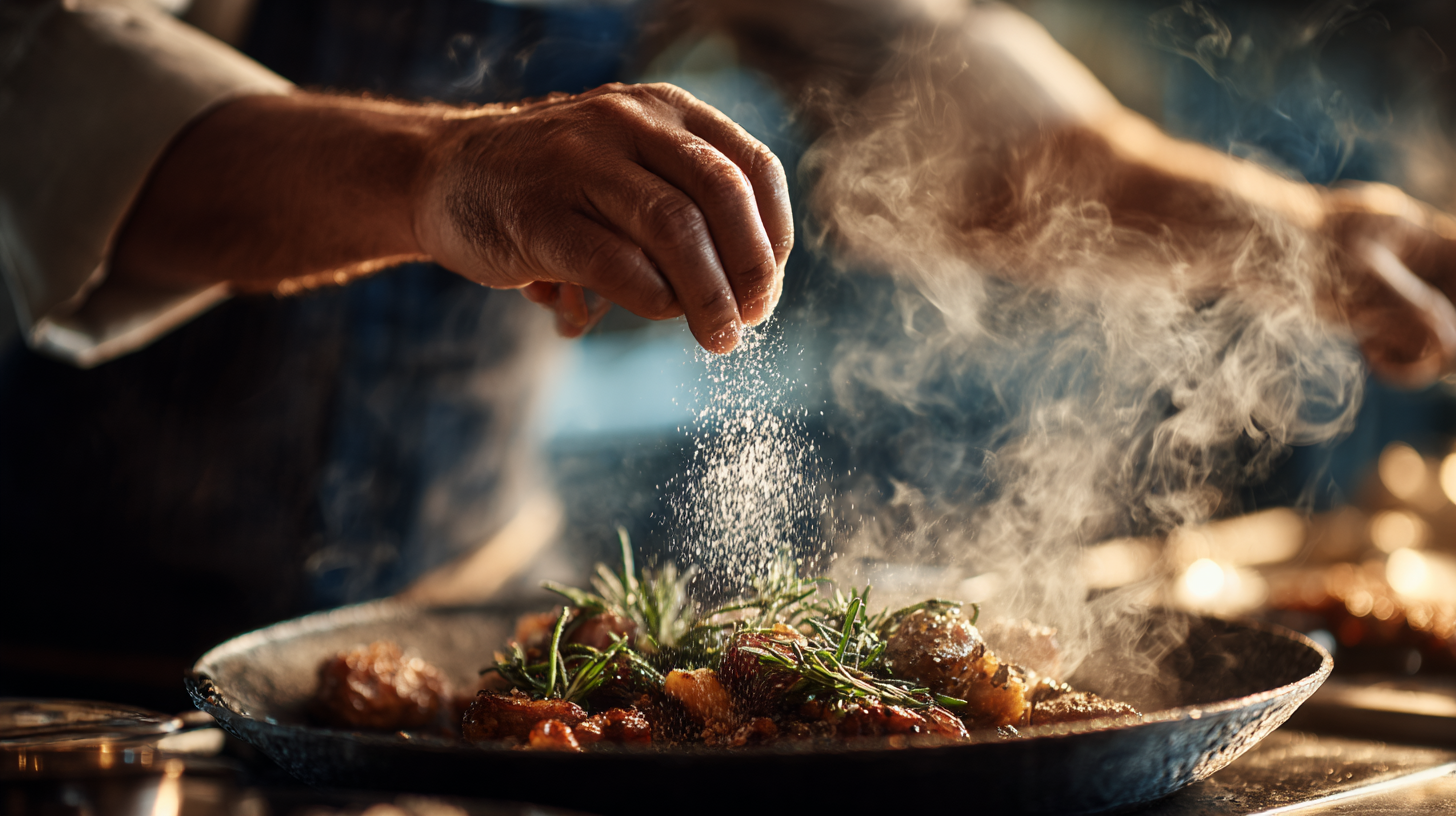
Introduction
For many cooks, seasoning feels mysterious. Salt, acid, fat, heat, aromatics, pungency and chili burn, sweetness, bitterness, umami, and texture all influence the final result, but not always in obvious ways. How much should you add? When should you add it? What should be applied early, what should be saved for the end, and how do these elements work together instead of fighting each other?
That uncertainty is exactly why this guide exists.
Seasoning is one of the defining differences between food that is merely competent and food that feels complete, deliberate, and deeply satisfying. It is not only about adding salt or making food more intense. It is about understanding the role of each seasoning force, the timing of each addition, the quantity required, and the balance that gives a dish clarity, depth, brightness, structure, and life.
This guide is designed to serve as both a teaching tool and a working reference. You can study it to understand the foundations, return to it when troubleshooting a dish, or use it to build better instincts in real time at the stove. As you practice, the logic of seasoning will become less mysterious. You will begin to recognize what a dish needs, when it needs it, and how a small adjustment can completely change the result.
This guide focuses primarily on savory cooking. Many of the underlying ideas carry into baking, but salt, sweetness, structure, and fermentation behave differently there, and baking follows its own seasoning logic.
Seasoning becomes less mysterious when its logic becomes visible. The palate and hands still have to do the work, but a clear framework helps you practice with more intention — and that almost always leads to better food.
1. The Core Forces of Seasoning
Seasoning works through a set of core functions. These are not merely ingredients or flavorings, but forces that shape how food is perceived. Understanding them helps you diagnose what a dish needs and season with more intention and less guesswork.
1. Salt = Clarity
Salt is the foundation of seasoning. Used properly, it does not simply make food salty. It sharpens flavor definition and makes ingredients taste more distinctly like themselves. A tomato tastes more tomato-like, a mushroom more mushroom-like, and a roast chicken more chicken-like when properly salted.
Salt also changes how moisture behaves. When applied in advance, it often draws moisture to the surface first through osmosis. That moisture dissolves the salt, and with time it is reabsorbed, carrying seasoning back into the ingredient. In proteins, salt also alters structure enough to improve water retention and texture. This is why advance salting or dry-brining can improve both flavor penetration and juiciness.
It is useful to distinguish between salting for flavor and salting for texture. Salting pasta water is mainly about seasoning the ingredient itself so it does not taste blank beneath the sauce. Salting onions early helps them release moisture and soften evenly. Salting meat well in advance is partly about flavor, but also about browning, moisture management, and texture.
Salt also suppresses some bitterness. This is one reason a pinch of salt can improve coffee, grapefruit, bitter greens, or dark chocolate desserts. It does not remove bitterness entirely, but it can make it feel more integrated and less harsh.
Salt perception is also affected by temperature. Food often tastes saltier as it cools, which is one reason seasoning judged in a boiling pot may feel more aggressive in the bowl. A cook who understands this is less likely to over-correct hot food.
When salt is missing, food tastes flat, dull, or indistinct. When overused, it overwhelms nuance. The goal is not obvious salinity. The goal is clarity.
2. Acid = Brightness
Acid brings lift, contrast, and energy. It wakes up dull food, cuts through richness, and gives shape to flavors that might otherwise feel heavy or muddy. If salt sharpens, acid enlivens.
Acid is especially important in dishes that are fatty, creamy, starchy, roasted, or long-cooked. Braises, bean dishes, soups, purées, creamy sauces, and rich meats often need acid to avoid feeling heavy. A dish can be adequately salted and still feel lifeless if it lacks brightness.
Not all acids behave the same way. Citrus juice and vinegar are not interchangeable. Citrus brings acidity along with volatile aromatic compounds that are most vivid when used late. That is why lemon or lime usually has its greatest impact at the finish. Vinegar can also brighten a dish, but it often integrates better with some cooking, especially in braises, pan sauces, reductions, and dressings. A squeeze of lemon feels fresh and immediate; a splash of sherry vinegar feels firmer, deeper, and more structural.
Acid is also highly sensitive to temperature. It often reads sharper in cool or chilled food than in hot food. This matters in vinaigrettes, chilled soups, grain salads, and foods that will rest before serving. A dressing that tastes balanced at room temperature may feel more acidic once cold.
This is why timing matters. Add acid early when you want it to mellow into the dish. Add it late when you want brightness and top-note lift. Too little acid leaves food heavy or tired. Too much makes food sharp, sour, or thin. Properly used, acid makes a dish feel alive.
3. Fat = Body
Fat gives food roundness, richness, and physical presence on the palate. It carries flavor, softens harsh edges, and helps aromatic compounds linger. Many flavors dissolve more effectively in fat than in water, which is why blooming spices in oil or finishing vegetables with butter makes them taste fuller and more integrated.
Fat also gives a dish body. A vinaigrette without enough oil may taste sharp and fragmented. A pan sauce mounted with butter feels more complete than the same liquid left thin and angular. Coconut milk gives curries weight and continuity. Olive oil can make vegetables taste more coherent and satisfying even when used very simply.
One of fat’s most important roles is emulsification. When fat is properly dispersed into a liquid phase, the result feels unified and luxurious. When it is not, it feels greasy or broken. This is the difference between a glossy pan sauce and one with oil floating on top, or between a balanced vinaigrette and one that separates instantly. Understanding this changes how a cook finishes sauces, dressings, and reductions.
Fat also changes the timing of flavor perception. Cold butter whisked in at the end softens edges and gives gloss. Warm olive oil drizzled at the finish leaves a more aromatic surface impression. Rich fats can buffer perceived sharpness and help a dish feel calmer and more integrated.
Temperature matters here as well. Fat can mute or delay flavor release, especially when cold or emulsified. This is one reason chilled foods often need sharper acid or more deliberate aromatic lift than warm foods, and why a rich sauce may need a brighter finish than its lean equivalent.
When fat is lacking, food can feel thin, sharp, or incomplete. When excessive, it becomes heavy and needs contrast, usually from acid, herbs, or bitterness. Fat should support flavor, not bury it.
4. Heat = Transformation
Heat is a seasoning force because it alters the way ingredients taste. Raw garlic, toasted garlic, roasted garlic, and browned garlic all season a dish differently. The same is true of onions, butter, mushrooms, tomatoes, spices, and proteins. Heat does not merely cook food; it transforms flavor.
Several different processes matter here. Maillard browning produces the savory, roasted, deeply complex notes associated with seared meat, toasted bread crust, roasted mushrooms, and browned onions. It depends on the interaction of amino acids and sugars. Caramelization is the browning of sugars themselves, producing sweeter, nuttier, more rounded flavors. Pyrolysis and charring produce darker, more bitter, smoky compounds that can add useful contrast when controlled.
These processes are related, but not identical. A caramelized onion contributes sweetness and depth. A deeply browned mushroom contributes savoriness. A charred cabbage leaf contributes bitterness and smoke. A cook who understands these distinctions can control heat more precisely, rather than treating all browning as the same thing.
Heat environment matters too. Dry heat concentrates and browns. Moist heat softens and blends. Gentle heat can draw out sweetness and integration. Aggressive heat can create crust, smokiness, and contrast. Toasted, bloomed, simmered, and raw spices all behave differently because heat alters their aromatic profiles.
When heat is used well, ingredients become deeper, sweeter, more savory, or more complex. When it is mismanaged, food tastes raw, scorched, steamed instead of seared, or simply dull. Heat is not just a cooking method. It is one of the primary ways flavor is built.
5. Aromatics = Complexity
Aromatics create the flavor architecture beneath the obvious tastes of salt, acid, and fat. Onion, shallot, garlic, ginger, celery, fennel, scallion, herbs, and dry spices give food identity, direction, and background depth. They are often the first layer of seasoning a cook builds.
Aromatic structure is what makes one dish feel French, another Italian, another Thai, Indian, Mexican, or Middle Eastern. It gives shape to the food before final adjustments are ever made. A stew made without aromatic depth may be edible, but it rarely feels complete. A sauce without aromatic direction may be rich and salty but still somehow anonymous.
Aromatics also work differently depending on how they are used. Garlic slowly cooked in oil becomes sweet and mellow. Thyme simmered in a braise gives background structure. Chopped parsley at the end adds freshness and lift. Ground cumin bloomed in fat behaves differently from cumin added at the finish.
When aromatics are weak, food tastes plain even if technically seasoned. When they are excessive or contradictory, food tastes busy or confused. Complexity works best when it has direction.
6. Pungency and Chile Burn = Stimulus
This category is distinct from both heat, as cooking temperature, and aromatics, as background flavor architecture. It includes ingredients that create sharpness, stimulation, and a strong sensory impact on the palate.
Chiles create capsaicin burn. Black pepper creates a gentler warming bite. Mustard, horseradish, and wasabi create a more nasal, volatile pungency. Ginger can serve as both an aromatic and a pungent ingredient, depending on how it is used.
These sensations are not the same, and strong cooks benefit from distinguishing them. A dish that needs black pepper often does not need chile. A dish that needs mustard or horseradish often needs a bit of edge, not a burn. A dish that needs fresh chile may need energy and brightness as much as spiciness.
Pungency and chile burn are usually not structural in the same way as salt or acid, but they are powerful tools for contrast and momentum. They can keep food from tasting soft, heavy, or overly rich. They can also help define cuisine and character.
When they are missing, some foods can taste flat or sleepy. When overused, they dominate the palate and obscure everything else. Their best use is controlled and deliberate.
7. Sweetness = Balance
Sweetness rounds harsh edges and stabilizes flavor. It balances bitterness, acidity, salinity, and pungency. It does not always appear as sweetness in an obvious sense. Often it works quietly in the background, making food feel calmer and more complete.
A small amount of sugar can soften an aggressive vinaigrette. Honey can round a sharp glaze. Caramelized onions can mellow a tomato sauce. Mirin can soften salt and reinforce aroma in Japanese cooking. Roasted carrots or peppers can bring natural sweetness that balances bitterness and acid in savory dishes.
Sweetness is most effective when it is restrained. It is rarely meant to announce itself in savory cooking. Its role is usually corrective or stabilizing. Too little sweetness in some dishes leaves them sharp, austere, or overly bitter. Too much makes them cloying and collapses tension.
Sweetness should not flatten a dish. It should make it more balanced.
8. Bitterness = Structure
Bitterness gives food shape, contrast, and sophistication. It is one of the least understood seasoning tools, but also one of the most important for keeping dishes from feeling soft, sweet, or one-dimensional.
Bitterness can come from bitter greens, citrus zest, coffee, cocoa, mustard greens, certain spices, charred edges, toasted seeds, dark caramel, or cruciferous vegetables. Used in small amounts, it adds tension and keeps the palate engaged. It often functions structurally rather than loudly.
This is especially important in rich or sweet dishes. A braise with no bitterness may feel heavy. A sweet vegetable purée may need a touch of char, pepper, or a bitter herb to feel complete. A salad often needs not just acid and salt, but some pleasantly bitter element to create shape.
When bitterness is absent, food can feel overly soft or monotonous. When excessive, it turns harsh and punishing. Controlled bitterness is not a flaw. It is one of the ways cooks give food definition.
9. Umami = Depth
Umami adds savory persistence, fullness, and a sense of completion. It is the quality that makes broths feel deep, mushrooms feel meaty, tomatoes feel satisfying, and long-cooked sauces feel resonant rather than merely salty.
Umami comes from glutamate-rich and nucleotide-rich ingredients: tomatoes, aged cheeses, soy sauce, miso, mushrooms, cured meats, anchovies, seaweed, stocks, fermented pastes, and browned proteins. It matters in nearly every style of savory cooking, but especially in soups, sauces, braises, vegetarian dishes, and foods that need more backbone.
One of the most important ideas here is umami synergy. Some savory ingredients reinforce one another more powerfully together than either would alone. Tomatoes and anchovies, mushrooms and Parmesan, miso and chicken stock, seaweed and fish: these combinations do not merely add up. They amplify. This helps explain why so many classic combinations taste deeper and more satisfying than their ingredient lists might suggest.
That principle is practical. Good cooks do not just add one umami-rich ingredient and stop. They often build savory depth by combining different kinds of umami in a way that feels integrated rather than obvious.
When umami is missing, a dish may taste thin even if properly salted. When overused, it can become heavy, muddy, or monotonously savory. The best use of umami deepens flavor without making its mechanism too obvious.
10. Texture = Perception
Texture changes how seasoning is perceived. Strictly speaking, many professional chefs and traditional culinary schools would not classify texture as a seasoning category in the same formal sense as salt, acid, fat, or heat. They would usually treat it as a separate but equally important dimension of cooking. That distinction is worth making.
It still belongs in this guide because texture directly affects flavor perception. Crunch, crispness, creaminess, silkiness, chewiness, and flakiness all affect how flavor reaches the palate. Flaky salt on a finished steak tastes different from dissolved salt because it arrives in bursts. Crunchy breadcrumbs on pasta or vegetables make a dish feel more vivid because contrast increases attention. Creamy yogurt under roasted vegetables changes not just mouthfeel, but how acid, pungency, and salt are perceived.
Texture also affects pacing and aroma release. Crisp foods fracture and release aroma differently than soft ones. Creamy foods coat the palate and can slow the delivery of flavors, making dishes feel quieter, rounder, or more persistent. A thin broth and a velvety purée made from the same ingredients will not read the same because the palate receives them differently.
Texture also helps explain the difference between sequential and simultaneous flavor. Some tastes arrive quickly and fade fast; others build slowly and linger. Citrus and fresh herbs often strike early. Rich fat and umami tend to broaden the mid-palate and extend the finish. Crunch can sharpen the bite’s opening impression, while creaminess can delay and soften it. A strong cook learns not only which flavors are present, but when they arrive and how long they stay.
So while texture may not be a traditional seasoning category, it plays a similar level of importance in finished foods. When texture is neglected, food can taste monotonous even when the seasoning is correct. When used well, it amplifies flavor and makes dishes more compelling.
How These Functions Work Together
No single seasoning element works in isolation. Salt clarifies, acid lifts, fat rounds, heat transforms, aromatics define, pungency stimulates, sweetness softens, bitterness structures, umami deepens, and texture changes perception. Good seasoning comes from understanding the interaction between these forces.
That interaction is not only about balance, but also about timing on the palate. Some elements hit immediately, others bloom in the middle, and others shape the finish. Acid often announces itself early. Fat can delay and soften the release of flavor. Umami tends to linger. Bitterness often becomes more noticeable at the end of a bite. Texture changes how quickly those signals arrive and how vividly they register.
Temperature matters too. Hot food can mute acidity and soften aromatic detail. Cooler food can make acid seem sharper and salt more pronounced, while fat can seem firmer, duller, or more coating. This is why a soup tasted boiling hot may need to be checked again in the bowl, and why chilled foods often need more deliberate brightness and aromatic lift than warm ones.
For example:
- A braise may need salt, umami, and heat for depth, then acid and herbs for lift.
- A salad may need acid and salt first, fat for body, and texture for contrast.
- A mushroom dish may need browning for transformation, butter for body, soy for umami, and lemon for brightness.
That is why strong cooks season in layers and taste repeatedly. Strong seasoning is rarely about one dramatic addition. It is about building balance across the whole life of the dish, and across the whole experience of the bite.
This section gives you a consistent vocabulary for the rest of the guide:
- Salt clarifies.
- Acid brightens.
- Fat gives body and carries flavor.
- Heat means cooking temperature and method — the transforming force behind browning, concentration, softening, and extraction.
- Aromatics include alliums, herbs, and dry spices — the ingredients that build background complexity, identity, and direction.
- Sweetness balances and rounds.
- Bitterness provides structure and tension.
- Umami deepens and extends savory flavor.
- Texture changes how flavor is perceived through contrast, pacing, and mouthfeel.
- Pungency and chile burn form their own sensory category — distinct from heat as cooking temperature and from aromatics as flavor architecture.
Taken together, these are not isolated tricks but interacting seasoning forces. Strong cooks learn to recognize what each one contributes, when it should lead, and how to combine them so a dish tastes balanced, expressive, and complete.
2. Layering: How Seasoning Is Built
Good seasoning is usually layered rather than added all at once. This is one of the clearest differences between food that tastes assembled and food that tastes composed.
Less experienced cooks often season only at the end, treating seasoning as a correction. Strong cooks season throughout the dish’s life. They use different ingredients at different moments for different reasons: some additions need time to penetrate, soften, dissolve, or integrate; others are most effective when they remain fresh, sharp, or volatile.
Layering is what turns seasoning from a final adjustment into a cooking method.
The Core Principle
Each stage of cooking offers a different opportunity:
- Early seasoning builds depth and internal flavor.
- Mid-cook seasoning develops body, integration, and direction.
- Final seasoning sharpens, balances, and restores life.
The same ingredient can behave differently depending on when it is used. Salt applied early can penetrate and season from within. Salt added at the end tends to land more on the surface. Lemon juice added at the beginning softens into the dish; lemon juice added at the end brightens it. Herbs cooked from the start contribute background structure; herbs added at the finish contribute aroma and lift.
Timing changes the function.
Why Layering Matters
Food is not static as it cooks. Moisture evaporates. Proteins tighten and relax. Sugars brown. Aromatics mellow. Liquids reduce. Fat disperses or separates. Ingredients that seemed balanced early may taste dull, harsh, or overly concentrated later.
Layering accounts for these changes.
It also helps avoid two common problems. The first is underseasoning the interior of food and then trying to fix it with aggressive surface seasoning. The second is building a dish that has depth but no lift, because all of the seasoning was applied too early, and nothing fresh was added at the end.
A properly layered dish usually has all three of these qualities:
- depth from early seasoning
- coherence from mid-cook seasoning
- freshness and precision from the finish
Layer 1: Foundation Seasoning
Foundation seasoning is the first deliberate flavor work done to the dish. It establishes the base and gives the food something to build on.
This often includes:
- salting meat or fish before cooking
- searing proteins to build browned, savory depth
- salting onions or vegetables as they sweat
- rendering cured meats for fat and flavor
- building a base with aromatic vegetables
- blooming dry spices in fat
- browning tomato paste for deeper sweetness and umami
- adding butter or another cooking fat to carry and round flavor
- adding woody herbs early so they can infuse
The purpose of foundation seasoning is not brightness; it is structure.
When you salt a steak in advance, you are not simply adding salt. You are improving flavor penetration, moisture behavior, and browning potential. When you salt onions at the start of a soup, you help them release moisture, soften evenly, and begin forming the flavor base. When you bloom cumin or coriander in oil, you are not just heating spice. You are opening fat-soluble aromatic compounds and distributing them through the dish.
Foundation seasoning creates depth that cannot be convincingly added later.
Common foundation examples
- beef stew: salt on the meat, aromatics in the pot, tomato paste browned, bay and thyme added early
- curry: onion or shallot cooked down, ginger and garlic added, dry spices bloomed in fat
- roast vegetables: oil, salt, pepper, perhaps cumin or coriander before roasting
- pasta sauce: olive oil, garlic or onion, anchovy or tomato paste, aromatics in the base
Layer 2: Development Seasoning
Development seasoning happens once the dish is underway. At this stage, the goal is not simply to start flavor, but to shape and refine it as ingredients combine, moisture reduces, and texture changes.
This often includes:
- additional salt in small corrections
- black pepper or other warming ingredients added as the dish evolves
- umami ingredients such as miso, soy sauce, anchovy, mushrooms, stock, or Parmesan rind
- added fat for body or emulsification
- deglazing liquids such as wine, stock, or vinegar
- cream, coconut milk, butter, or olive oil to adjust texture and continuity
This is where much of the dish’s identity is clarified. Early seasoning gives structure; development seasoning gives contour.
A sauce reducing on the stove may need another small addition of salt, but only after you see how much concentration occurs. A braise may need tomato paste or stock midway through to deepen its body. A vegetable dish may need butter added late in cooking so the fat rounds the flavor without becoming greasy. A soup may need a Parmesan rind, miso, or soy to move from simply seasoned to savory and complete.
Development seasoning is about judgment. You are tasting not for isolated ingredients, but for the shape of the whole dish.
Common development examples
- braise: salt adjusted after reduction begins; stock, tomato, or anchovy added for depth
- pan sauce: fond deglazed, liquid reduced, butter mounted in for body
- bean pot: aromatic base combined with cooking beans, olive oil or cured meat added for richness
- mushroom sauté: cooking heat adjusted for browning, then butter, shallot, and perhaps soy or sherry added
Layer 3: Finishing Seasoning
Finishing seasoning is what gives a dish precision. It restores what long cooking, reduction, or resting may have muted. It is where brightness, top-note aroma, contrast, and final balance are established.
This often includes:
- lemon or lime juice
- vinegars used late
- fresh herbs
- citrus zest
- flaky salt
- fresh cracked pepper
- finishing oils such as olive oil, chile oil, or sesame oil
- grated cheese
- yogurt, crème fraîche, or a soft cultured garnish
- capers, pickles, preserved lemon, or relishes
- crisp textures such as breadcrumbs, nuts, or seeds
The finish is often where a good dish becomes a compelling one.
A braise can be deep and rich but still taste tired until a small amount of acid or fresh herb wakes it up. A roasted vegetable dish may be properly salted and browned, but still needs yogurt, lemon, or herbs to create contrast. A pasta sauce may have body and umami, but require zest, pepper, or cheese at the end to feel complete.
Finishing is not a garnish in the decorative sense. It is the final seasoning decision.
It is also where cooks shape the order in which flavor arrives. A squeeze of lemon or scatter of herbs hits early and brightens the first impression of a bite. Butter, cheese, and umami-rich finishes fill in the middle and extend the finish. Crunchy toppings, flaky salt, and pepper sharpen the opening impact and make the final seasoning feel more vivid. Good finishing is not just about balance. It is also about pacing.
Common finishing examples
- fish: lemon, herbs, capers, browned butter
- steak: flaky salt, pepper, herb butter, chimichurri, or a sharp salad alongside
- soup: acid, cream, herbs, chile oil, croutons
- beans: olive oil, vinegar, parsley, yogurt, or pickled onion
Timing Changes Outcome
A useful way to think about layering is that ingredients do different jobs depending on when they are added.
Salt
- early: penetration, moisture management, internal seasoning
- mid-cook: adjustment as ingredients combine and reduce
- late: surface impact, texture, and final precision
Acid
- early: integration and mellowing
- mid-cook: structure and balance
- late: brightness and lift
Fat
- early: cooking medium and flavor extraction
- mid-cook: body, continuity, emulsification
- late: gloss, aroma, softness, and richness
Aromatics
- early: background structure from alliums, woody herbs, and dry spices
- late: freshness and lift from tender herbs, zest, scallion, and fresh aromatic accents
Pungency and chile burn
- early: integration and mellowing when cooked into the dish
- late: sharper bite, brighter attack, and more obvious contrast
This is why a dish can contain the “right” ingredients and still taste wrong. The problem is often not what was used, but when.
Layering and Quantity
Layering is also how cooks avoid overcorrecting. Rather than making one large seasoning decision, they make a series of smaller ones.
This matters because seasoning intensifies as water evaporates and flavors concentrate. A stew that seems slightly underseasoned early may become perfectly balanced after reduction. A vinaigrette that seems too sharp before oil is added may become right once emulsified. A soup that tastes complete in the pot may need more salt or acid once cooled slightly in the bowl.
Small adjustments are safer and more precise than dramatic corrections.
A practical rule is:
- season enough early to build the base
- correct carefully as concentration changes
- reserve part of the final impact for the finish
Common Layering Mistakes
Salting only at the end
This creates surface salinity without internal seasoning. The food may taste salty but still bland.
Adding acid too early when brightness is needed late
Long cooking can mute the fresh, volatile character of some acids, especially citrus.
Overseasoning before reduction
Liquids reduce. Salt does not evaporate. Always account for concentration.
Using too many competing accents
A dish with lemon, vinegar, pickles, chile oil, herbs, cheese, and toasted nuts can become noisy if the base is not strong enough to support them.
Confusing pungency with seasoning depth
A dish can have pepper, chile, mustard, or garlic bite and still be underseasoned, under-acidified, or lacking body.
Forgetting the finish
Many dishes fail not because the base is weak, but because nothing was added at the end to restore contrast and energy.
A Practical Tasting Sequence
To build layering discipline, taste at consistent checkpoints:
- after the base is built
- after reduction or simmering, the concentration changes
- before plating
- after the final acid, herbs, or finishing fat
- once again at serving temperature
That last point matters because temperature changes perception. Food tasted very hot will often seem less acidic and less aromatic than it will a minute later. As dishes cool slightly, salt can become more pronounced, acid can feel sharper, and fat can feel more coating. This is one reason cooks over-salt soups in the pot and under-acid chilled or room-temperature dishes.
The Goal of Layering
Layering is not complexity for its own sake. It is how cooks build food that tastes integrated rather than patched together.
The goal is to create dishes with:
- flavor inside, not just on top
- depth without heaviness
- brightness without harshness
- richness without greasiness
- contrast without confusion
That is the real logic of seasoning. Not adding more, but adding with purpose, at the right time, for the right effect.
3. Ingredient Categories: What They Do and How They’re Used
If the earlier sections explain the logic of seasoning, this section explains the tools. Ingredients do not season in the same way, even when they seem to belong to the same category. Lemon juice and sherry vinegar are both acidic, but they shape a dish differently. Butter and olive oil are both fats, but they produce different textures, aromas, and finishes. Soy sauce and kosher salt both add salinity, but one also contributes fermentation and umami.
A strong cook learns not only what category an ingredient belongs to, but what kind of version of that category it is.
The most useful way to read this section is comparatively. Ask not just, “What does this ingredient do?” but, “Why would I choose this instead of another ingredient from the same category?”
A. Salt Sources
The key distinction in salt sources is whether you want clean salinity, surface texture, or salinity plus secondary flavor.
Kosher salt
What it does: Clean, direct salinity with good control in the hand.
How it is used: General cooking, seasoning proteins, vegetables, soups, sauces, and pasta water.
Kosher salt is the default seasoning salt in many kitchens because it is easy to pinch, distribute, and judge. Reach for it when you want salt to do its primary job without adding another flavor direction.
Fine sea salt
What it does: Direct salinity with faster dissolution than coarser salts.
How it is used: Baking, brines, dressings, quick-dissolving applications, and precise finishing.
Choose fine salt when fast integration matters more than hand feel. It is useful when you want the seasoning to disappear into the food rather than remain texturally present.
Flaky salt
What it does: Sharp bursts of salinity and a fragile crunch.
How it is used: Finishing steaks, fish, vegetables, salads, eggs, chocolate desserts, and baked goods.
Choose flaky salt when the goal is final surface impact. It should reinforce internal seasoning, not replace it.
Soy sauce / tamari
What it does: Salt plus fermented umami depth.
How it is used: Marinades, stir-fries, sauces, braises, broths, vinaigrettes, butter sauces.
Use soy sauce when the dish needs more than salt. It darkens flavor, extends savoriness, and helps bridge other umami-rich ingredients. Tamari is often rounder and fuller, with less wheat character.
Fish sauce
What it does: Intense salinity with concentrated umami and fermented depth.
How it is used: Soups, curries, dipping sauces, dressings, braises, tomato sauces in small amounts.
Fish sauce is more penetrating than soy sauce and usually less broad. Reach for it when you want deep, savory impact without obvious bulk. In small quantities, it often disappears while making the whole dish feel more complete.
Miso
What it does: Salinity, fermentation, umami, and body.
How it is used: Broths, glazes, marinades, dressings, butter mixtures, and vegetable finishes.
Miso is useful when you want salt with thickness and savoriness. Compared with soy sauce, it is less transparent and more substantial. Lighter misos are sweeter and milder; darker misos are stronger and more assertive.
Anchovy
What it does: Salty, savory depth with strong umami potential.
How it is used: Pasta sauces, braises, vinaigrettes, roasted vegetables, pan sauces.
Anchovies are especially valuable when you want savory reinforcement without the dish tasting obviously fishy. It dissolves into the background and deepens other flavors.
Parmesan and other aged cheeses
What it does: Salinity, umami, nuttiness, and fat.
How it is used: Pasta, soups, risotto, salads, gratins, and vegetable finishes.
Aged cheeses season in multiple directions at once. Choose them when you want salt plus savory persistence plus richness, especially in foods that benefit from a lingering finish.
A practical comparison: salt sources
- Choose kosher salt for clean seasoning.
- Choose flaky salt for surface impact.
- Choose soy, fish sauce, miso, anchovy, or cheese for salt plus depth.
B. Acid Sources
The key distinction in acid is whether you want freshness, structure, softness, or punctuation.
Lemon juice
What it does: Bright, clean acidity with fresh aromatic lift.
How it is used: Fish, chicken, vegetables, soups, dressings, pan sauces, and finishing.
Choose lemon when the dish needs freshness and lift. It is especially effective in delicate foods where you want the acid to feel immediate rather than integrated.
Lime juice
What it does: Sharper, more aromatic acidity with a greener profile.
How it is used: Mexican, Thai, Vietnamese, Indian, grilled meats, seafood, and herb-heavy dishes.
Choose lime when the dish already has herbs, chiles, fish sauce, or warm spices and can support a more piercing acid.
Wine vinegars
What they do: Structural acidity with more savory integration than citrus.
How they are used: Dressings, braises, pan sauces, reductions, vegetables, and deglazing.
Choose wine vinegar when you want acid that feels built into the dish rather than laid on top.
- White wine vinegar is cleaner and more direct.
- Red wine vinegar is broader and more assertive.
- Sherry vinegar is rounder, deeper, and often more complex.
Cider vinegar
What it does: Acid with mild fruit character.
How it is used: Braised greens, slaws, pork dishes, chutneys, pickles, dressings.
Choose cider vinegar when you want brightness with some softness and a gentle fruit edge.
Rice vinegar
What it does: Gentle acidity with softness and slight sweetness.
How it is used: Asian dressings, cucumber salads, rice seasoning, dipping sauces, light pickles.
Rice vinegar is useful when lemon would be too sharp and wine vinegar too structural.
Balsamic vinegar
What it does: Sweet-acidic depth.
How it is used: Reductions, roasted vegetables, strawberries, dressings, glazes.
Balsamic is not a neutral acid. It seasons toward sweetness, darkness, and density. Use it when the dish can absorb that weight.
Yogurt, buttermilk, sour cream
What they do: Acid plus creaminess and cooling body.
How they are used: Marinades, dips, sauces, finishing roasted vegetables, grilled meats, pungent or chile-heavy foods.
Choose these when the food needs both brightness and softening. They are especially useful when acid alone would feel too sharp.
Tomatoes
What they do: Mild acidity plus sweetness and umami.
How they are used: Sauces, soups, braises, stews, raw salads.
Tomatoes are a mixed seasoning tool, not a pure acid. Choose them when you want brightness, sweetness, and savory depth together.
Capers, pickles, preserved lemon
What they do: Acid, salinity, and concentrated high-note intensity.
How they are used: Fish, rich meats, vinaigrettes, relishes, chopped sauces, and grain salads.
These are finishing acids more than structural acids. Use them when you want punctuation, not just balance.
A practical comparison: acid sources
- Choose lemon or lime for freshness.
- Choose vinegar for structure.
- Choose yogurt or buttermilk for acid plus body.
- Choose capers, pickles, or preserved lemon for a sharp finishing contrast.
C. Fat Sources
The key distinction in fat is whether you want roundness, aroma, neutrality, or identity.
Butter
What it does: Richness, softness, gloss, and a rounded finish.
How it is used: Basting, sautéing, pan sauces, emulsifying, finishing vegetables, and enriching purées.
Butter is especially effective when you want fat to integrate and soften. Brown butter shifts that effect toward nuttiness and deeper aroma.
Olive oil
What it does: Fruitiness, body, and aromatic surface richness.
How it is used: Dressings, finishing vegetables, poaching, marinades, sautéing, and drizzling.
Compared with butter, olive oil often sits more visibly on the surface of flavor. It can be structural or finishing, depending on the oil and the dish.
Neutral oils
What they do: Carry cooking heat and fat without adding much flavor.
How they are used: Searing, frying, roasting, blooming spices, and high-heat cooking.
Choose neutral oils when you want the function of fat without shifting the flavor direction.
Animal fats
What they do: Richness, savoriness, and distinctive identity.
How they are used: Roasted potatoes, braises, beans, sautéed vegetables, and confits.
Duck fat, bacon fat, and schmaltz bring a strong culinary character. Choose them when the fat itself should season the dish.
Coconut milk and cream
What they do: Body, richness, softness, sweetness, and aroma.
How they are used: Curries, soups, braises, stews, and desserts.
Coconut-based fats do more than enrich. They also mute sharpness, creating a distinctly soft, broad finish.
Sesame oil
What it does: Nutty aromatic richness.
How it is used: Finishing noodles, rice dishes, dressings, stir-fries, and dipping sauces.
Sesame oil is usually a finishing fat, not a background fat. Use it when you want the aroma to sit clearly on top.
A practical comparison: fat sources
- Choose butter for integration and roundness.
- Choose olive oil for the body plus an aromatic finish.
- Choose neutral oil when you want heat transfer without flavor imprint.
- Choose animal fats or sesame oil when the fat itself should shape identity.
D. Pungency and Chile Sources
The key distinction here is whether you want warmth, sharp pungency, or capsaicin-driven chile burn.
Black pepper
What it does: Warm pungency and aromatic lift.
How it is used: Throughout cooking or at the finish in sauces, meats, eggs, vegetables, and soups.
Black pepper is useful when you want structure and warmth rather than obvious chile burn.
Fresh chiles
What they do: Immediate chile burn with vegetal freshness.
How they are used: Salsas, stir-fries, curries, relishes, finishing slices, and sauces.
Use fresh chiles when the dish needs energy and freshness as much as spiciness.
Dried chiles and chile flakes
What they do: Controlled chile burn, often with smoky, fruity, or earthy character.
How they are used: Oil infusions, pasta, braises, sauces, roasted vegetables, stews.
Compared with fresh chiles, dried chiles usually integrate more deeply and feel less green.
Mustard
What it does: Sharp pungency, bitterness, and often acidity.
How it is used: Dressings, glazes, vinaigrettes, rubs, pan sauces.
Choose mustard when the dish needs edge and structure, not just burn.
Horseradish and wasabi
What they do: Nasal pungency and sharpness.
How they are used: Rich meats, seafood, cold sauces, cream-based accompaniments.
These cut through fat differently than chiles do. Their effect is faster, sharper, and less lingering.
Ginger
What it does: Warmth, brightness, freshness, and aromatic bite.
How it is used: Stir-fries, soups, braises, marinades, dressings, broths.
Ginger sits between aromatic and pungent ingredients. Choose it when the dish needs spice that also brightens.
A practical comparison: pungency and chile sources
- Choose black pepper for a warm structure.
- Choose fresh chiles for chile burn plus freshness.
- Choose dried chiles for deeper integration.
- Choose mustard, horseradish, or wasabi for sharper, quicker cutting power.
- Choose ginger when you want brightness and bite together.
E. Aromatics
The key distinction in aromatics is whether you want base-building depth or finishing lift.
Onion, shallot, leek
What they do: Sweet-savory base structure when cooked.
How they are used: Soups, braises, sauces, rice dishes, pan sauces, stews.
These build the background of a dish. Shallot is finer and sweeter; onion broader and sturdier; leek softer and more delicate.
Garlic
What it does: Aroma, sweetness when cooked, depth when browned, and pungency when raw.
How it is used: Raw dressings, oil infusions, roasted purées, sauces, marinades, soups.
Garlic changes dramatically with treatment. Raw is sharp. Gently cooked is mellow. Browned is nutty and forceful. Burnt is bitter.
Celery, carrot, fennel
What they do: Background sweetness, vegetal complexity, aromatic support.
How they are used: Mirepoix, soffritto, stock bases, braises, soups.
These are supporting aromatics. They rarely lead, but they often determine whether the base feels complete.
Scallion and chive
What they do: Fresh onion lift with less heaviness than cooked alliums.
How they are used: Eggs, soups, stir-fries, dumplings, sauces, finishing dishes.
Use these when you want onion character without cooked depth.
Tender herbs
Examples: parsley, cilantro, basil, dill, mint, tarragon
What they do: Freshness, aroma, lift, and regional identity.
How they are used: Folded in late, used raw, chopped into relishes, scattered at the finish.
Tender herbs usually belong near the end, where their volatile character remains intact.
Woody herbs
Examples: thyme, rosemary, sage, bay
What they do: Structure, depth, and slow-building aromatic complexity.
How they are used: Roasting, braising, stocks, long simmers, basting.
These are structural aromatics. They usually need time.
Dry spices
Examples: cumin, coriander, fennel seed, cinnamon, paprika, allspice
What they do: Warmth, fragrance, background complexity, and sometimes bitterness or sweetness.
How they are used: Bloomed in fat, toasted, simmered, or used in rubs and seasoning blends.
Dry spices belong with aromatics, not with chiles. Their main role is flavor architecture, not burn. That said, some spices sit near the border. Hot paprika, cayenne, and ground chiles carry both aromatic flavor and pungent or chile-driven force. In practice, the distinction matters because ingredients used mainly for fragrance are often bloomed or toasted early, while ingredients used mainly for bite or burn are often adjusted more cautiously and sometimes later.
A practical comparison: aromatics
- Choose onion, shallot, leek, celery, carrot, and fennel for the foundation.
- Choose garlic based on treatment: raw, mellow, browned, or roasted.
- Choose scallion, chive, and tender herbs for lift.
- Choose woody herbs for background structure.
- Choose dry spices for fragrance, warmth, and complexity.
F. Sweetness Sources
The key distinction in sweetness is whether you want neutral correction, character, or natural sweetness built into the food.
Sugar
What it does: Direct sweetness that balances acid, bitterness, and pungency.
How it is used: Tomato sauces, vinaigrettes, pickles, glazes, desserts, barbecue sauces.
Sugar is useful when you need a precise correction, but it should rarely be the first move in savory food.
Honey, maple, molasses
What they do: Sweetness with additional character.
How they are used: Marinades, glazes, dressings, roasted vegetables, braises.
Choose these when the sweetness itself should contribute to aroma and identity.
Sweet vegetables
Examples: carrot, onion, corn, roasted pepper
What they do: Natural sweetness, body, and a softer balancing effect.
How they are used: Roasted, sweated, puréed, blended into soups or sauces.
Natural sweetness is usually more integrated and less obvious than added sweetener.
Mirin and sweet wines
What they do: Sweetness combined with acidity and aroma.
How they are used: Japanese sauces, glazes, braises, and reductions.
Use these when the dish needs softness without losing aromatic complexity.
A practical comparison: sweetness sources
- Choose sugar when you need a clean, precise correction.
- Choose honey, maple, or molasses when sweetness should add both character and balance.
- Choose sweet vegetables when you want softness built into the dish.
- Choose mirin or sweet wines when you want sweetness with acidity and aromatic lift.
G. Bitter and Complexing Ingredients
The key distinction here is whether you want fresh, fragrant, or dark-roasted bitterness.
Bitter greens
What they do: Structural bitterness and contrast.
How they are used: Salads, braises, sautés, and grilled applications.
These bring freshness and shape, especially to rich food.
Citrus zest
What it does: Bitter-fragrant lift.
How it is used: Fish, pasta, vegetables, salads, desserts, dressings.
Use zest when juice would add too much liquid or too much acidity.
Charred or roasted edges
What they do: Bitterness, depth, and contrast.
How they are used: Grilled vegetables, broiled meats, roasted brassicas, seared fruits.
This is bitterness built through cooking heat rather than added as an ingredient.
Coffee, cocoa, dark chocolate
What they do: Bitterness, earthiness, and dark complexity.
How they are used: chili, mole, braises, spice rubs, and desserts.
These are useful when the bitterness should feel deeper and darker rather than fresh.
H. Umami Sources
The key distinction in umami is whether you want earthy depth, fermented savoriness, meaty reinforcement, or marine/mineral depth.
Mushrooms
What they do: Earthy savory depth.
How they are used: Stocks, sautés, fillings, broths, pasta, and sauces.
Mushrooms are especially effective when browned well and paired with other umami ingredients.
Tomato paste
What it does: Concentrated sweet-savory depth.
How it is used: Browning in fat for stews, braises, soups, and sauces.
Tomato paste deepens dramatically when cooked, darkening slightly in fat.
Fermented bean pastes and miso
What they do: Salinity, savoriness, and a deep background body.
How they are used: Broths, marinades, glazes, vegetable dishes, soups.
These often work best when balanced by acid or sweetness.
Cured meats
What they do: Salt, fat, and savory reinforcement.
How they are used: Pasta sauces, beans, braises, soups, and vegetable dishes.
Cured meats act as both aromatic base and umami engine.
Seaweed
What it does: Mineral, marine umami.
How it is used: Broths, rice, seafood cookery, and seasoning blends.
Seaweed is especially useful when a dish needs savory depth without meatiness.
A practical comparison: umami sources
- Choose mushrooms for earthy savoriness.
- Choose tomato paste for sweet-savory concentration.
- Choose miso or fermented pastes for a fermented backbone.
- Choose cured meats for savory richness.
- Choose seaweed for marine and mineral depth.
How to Use This Section
The point of ingredient knowledge is not memorizing lists. It is learning to choose deliberately.
Ask:
- Do I want a cleaner salt or a fermented salt?
- Do I need fresh acid or structural acid?
- Do I want richness that integrates, or aroma that sits on top?
- Does this dish need warmth, sharp pungency, or chile burn?
- Am I adding umami from one source, or building synergy from several?
- Should this ingredient disappear into the dish, or leave a visible signature?
That is the practical use of ingredient knowledge: not naming categories, but choosing the right version of each seasoning force for the food in front of you.
4. High-Value Seasoning Scenarios
The goal of this section is not to offer a large catalog of recipes. It is to show how seasoning logic behaves in real food.
Some scenarios are more instructive than others. A good vinaigrette teaches acid balance, dissolution, and emulsification. A good braise teaches the relationship between depth and brightness. A good pot of beans teaches the difference between seasoning early and seasoning only at the table.
These are high-value scenarios because they reveal principles that transfer broadly.
Scenario 1: Vinaigrette
A vinaigrette is one of the clearest ways to understand seasoning because it exposes the structure of balance so directly. There is nowhere to hide. If the acid is too sharp, it shows. If the salt is too low, the dressing tastes thin and incomplete. If the oil is poorly integrated, the dressing feels broken rather than composed.
Core logic
- acid defines
- salt sharpens
- fat rounds
- mustard or another emulsifier stabilizes
- sweetness, if needed, softens the edges
The sequence matters
A practical order is:
- start with the acid
- dissolve the salt into it
- add mustard, garlic, shallot, or other aromatics
- whisk in oil gradually
- taste and adjust
- add sweetness only if the dressing is too severe
This order matters because salt dissolves more readily in water than in oil. If the oil goes in first, the seasoning is harder to distribute evenly. If the acid is not properly balanced before emulsifying, the dressing is often corrected too late and too heavily.
It also shows how temperature changes perception. A vinaigrette that tastes balanced at room temperature may seem sharper once chilled. That is one reason dressings for cold salads often need to be tasted cold, not just mixed and assumed correct.
What this teaches
- salt must often dissolve to work properly
- acid needs body around it
- fat does not weaken flavor; it organizes it
- a small amount of sweetness can stabilize without making the dressing taste sweet
- aromatic additions must support the acid, not clutter it
Common corrections
If the vinaigrette tastes:
- too sharp: add more oil, a small amount of sweetness, or a gentler acid
- flat: add salt first, then reassess
- greasy: emulsify more thoroughly or reduce the oil
- muddy: simplify the aromatics or increase acidity slightly
- harsh: raw garlic or shallot may need to be reduced, softened, or better balanced
Transferable lesson
A vinaigrette teaches that seasoning is not about adding “more flavor.” It is about building a stable relationship between intensity, structure, and texture.
Scenario 2: Braise
A braise teaches one of the most important truths in seasoning: depth is not the same as completeness.
Long cooking can produce extraordinary savoriness, tenderness, and integration. It can also dull freshness, blur top notes, and flatten contrast. A braise often becomes rich long before it becomes balanced.
Core logic
- early seasoning builds internal depth
- browning from cooking heat builds savoriness
- aromatics establish direction
- liquid and reduction concentrate flavor
- final acid or herb lift prevents heaviness
The sequence matters
A sound braise often follows this order:
- season the meat in advance if possible
- brown the meat thoroughly
- cook the aromatic base
- brown tomato paste or add other savory builders
- add stock, wine, herbs, or other braising liquid
- simmer gently until tender
- adjust salt only after the concentration is clear
- finish with acid, herbs, gremolata, mustard, or another lifting element
The key point is that deep flavor is built early, but freshness is usually restored late.
This is also a good example of sequential flavor. The braise itself often fills the mid-palate and finish with fat, gelatin, and umami. The final herb, zest, or acid sharpens the bite’s initial impression and prevents the dish from feeling slow or dull.
What this teaches
- why advance salting matters
- why browning is part of seasoning, not just cooking
- why reduction changes quantity and concentration
- why rich food often needs acid more than it needs more salt
- why finishing elements are often what make a braise feel alive rather than dull
Common corrections
If the braise tastes:
- deep but flat: add acid, herbs, zest, or a sharper garnish
- salty and heavy: it may need dilution, not more complexity
- muddy: the aromatics may be overcooked or the finish absent
- thin: it may need more reduction, gelatin, umami, or better browning
- harsh: wine, tomato paste, or aromatics may not have been cooked enough earlier
Transferable lesson
A braise teaches that long cooking builds depth, but depth alone does not finish a dish. A final contrast is often essential.
Scenario 3: Beans and Lentils
Beans and lentils are one of the clearest tests of whether a cook understands internal seasoning. They expose the weakness of “seasoning at the table” more brutally than almost any other ingredient.
A bowl of beans can be garnished with oil, herbs, vinegar, hot sauce, and cheese and still taste dull if the beans themselves were never seasoned properly during cooking.
Core logic
- beans need seasoning in the cooking phase, not just after
- aromatic bases matter enormously
- fat gives body
- acid is best used late
- finishing elements should sharpen, not rescue
The sequence matters
A strong bean preparation often works like this:
- season the cooking liquid moderately
- build an aromatic base separately or in the same pot
- add savory depth through stock, cured meat, tomato, mushrooms, or Parmesan rind if appropriate
- cook until tender
- adjust salt once texture is right
- finish with olive oil, herbs, acid, yogurt, or chile
Beans absorb seasoning differently than many cooks expect. Salt added only at the end tends to sit around them rather than in them. They need time with seasoning to taste complete.
Temperature matters here, too. Beans often taste heavier and less lively as they cool, which is one reason they benefit from a final acid or herb correction closer to serving than many cooks expect.
What this teaches
- the difference between internal seasoning and surface seasoning
- how fat makes starches feel rounder and less chalky
- how acid too early can interfere with the final balance
- how finishing elements should clarify the dish, not compensate for a weak base
Common corrections
If the beans taste:
- dull: they likely need more salt in the base, not just more garnish
- chalky: they may need more fat, more cooking, or a better aromatic foundation
- heavy: finish with vinegar, lemon, herbs, or pickled onion
- confused: simplify the finish and strengthen the pot itself
- salty but boring: they probably need acid and aromatic lift
Transferable lesson
Beans teach patience. They reward seasoning that is built slowly and exposed repeatedly to the ingredient, not seasoning scattered over the top at the end.
Quick-Reference Scenarios
The following scenarios rest on the same principles, but can be summarized more briefly.
Steak
Seasoning logic: Salt early for internal seasoning and crust development. Use cooking heat aggressively for browning. Finish after resting with flaky salt, pepper, butter, or a sharp green sauce.
Common pattern: dry-brine → sear → rest → finish with flaky salt and herb butter or chimichurri
Key lesson: strong meat needs both depth and relief
Fish
Seasoning logic: Season lightly but precisely. Protect texture with appropriate fat. Use acid and herbs late to preserve delicacy and lift.
Common pattern: salt → gentle sear or roast → finish with lemon, herbs, capers, brown butter, or olive oil
Key lesson: the finish matters more than force
Greens
Seasoning logic: Salt during cooking so the greens collapse and season evenly. Use fat for body. Finish with acid to prevent dullness.
Common pattern: oil or butter + garlic → greens → salt → finish with lemon or vinegar
Key lesson: greens often need acid as much as salt
Root Vegetables
Seasoning logic: Salt and fat early, brown well, then lift their sweetness with acid, cultured dairy, herbs, seeds, or bitterness.
Common pattern: oil + salt + roast → finish with yogurt, lemon, tahini, vinegar, herbs, seeds, or nuts
Key lesson: sweetness needs contrast
Pasta Sauce
Seasoning logic: Build the sauce in fat, season gradually, use pasta water for emulsion, and reserve final brightness or aromatic lift for the end.
Common pattern: aromatic base → umami builder → reduction/emulsion → finish with cheese, acid, herbs, zest, or pepper
Key lesson: pasta needs internal seasoning, emulsified sauce, and a deliberate finish
Eggs
Seasoning logic: Eggs need enough salt to avoid blandness, enough fat to avoid dryness, and a finish that gives contrast.
Common pattern: salt + butter → cook gently → finish with herbs, chile sauce, cheese, or flaky salt
Key lesson: delicate foods still need assertive seasoning logic
Salad
Seasoning logic: Dressings must be seasoned completely. Greens often need more salt than expected. Texture and contrast are not optional.
Common pattern: seasoned vinaigrette → dressed greens → finish with crunch, cheese, herbs, seeds, or flaky salt
Key lesson: acid without salt is sharpness, not balance
What These Scenarios Have in Common
Across all of these dishes, the pattern is consistent:
- season early enough to build depth
- adjust during cooking as the concentration changes
- finish with something that restores precision
The specific ingredients vary. The logic does not.
That is the point of scenarios like these. They train your pattern recognition. Once you understand the logic behind a braise, a vinaigrette, a pot of beans, a steak, or a plate of greens, you begin to recognize the same seasoning problems and solutions across everything else you cook.
5. Practical Seasoning Heuristics
Heuristics are useful because they help a cook move quickly from vague dissatisfaction to a specific correction. A dish rarely feels “off” for mysterious reasons. More often, it is missing one of a few predictable things: enough salt, enough acid, enough browning, enough body, enough contrast, or enough aromatic lift.
These are not rigid rules. They are working diagnostics. Their purpose is not to replace tasting, but to make tasting more legible.
When food tastes bland
Bland food usually does not need more of everything. It usually needs one of a few specific things:
- more salt
- more acid
- more browning
- more umami
The first move is usually salt. If salt is low, other flavors often remain indistinct, no matter what else you add. If additional salt does not solve the problem, the next likely issue is a lack of brightness or depth. Rich soups, bean dishes, purées, and braises often become dramatically more vivid with a small addition of acid. Foods that feel bland even when properly salted may need better browning, more aromatic structure, or a deeper savory base.
A useful question is: Is this dish underseasoned, underdeveloped, or underfinished?
Those are different problems and require different fixes.
When food tastes heavy
Heavy food usually has enough depth but not enough contrast. It often needs:
- acid
- fresh herbs
- bitter contrast
- less fat on the finish
- a lighter garnish or accompaniment
This is especially common in braises, creamy soups, stews, rich sauces, mashed vegetables, and slow-cooked beans. A dish can be technically well-made and still feel oppressive on the palate if nothing lifts it. In those cases, acid is often the best first correction. After that, herbs, pepper, zest, greens, pickled elements, or a reduction in finishing fat can restore balance.
A practical rule: if a dish feels rich but sleepy, reach for brightness first, not more salt.
When food tastes harsh
Harshness is different from intensity. Intense food can still feel balanced. Harsh food feels sharp, aggressive, raw, or unresolved.
It usually needs:
- fat
- sweetness
- dilution
- more cooking
- gentler acid balance
Harshness often comes from raw garlic, raw onion, overly sharp acid, excessive reduction, scorched spices, or an unintegrated bitter edge. Fat can soften the profile. A small amount of sweetness can stabilize it. In some cases, the real issue is that the aromatics or tomato paste were not cooked long enough. In others, the dish has simply concentrated too far and needs dilution rather than more correction.
A useful distinction: harshness usually means the edges are wrong, not the center.
When food tastes salty but is not delicious
This is one of the most important diagnoses in cooking. Salty food is not necessarily well seasoned.
When a dish tastes salty but still unsatisfying, it often lacks:
- acid
- fat
- sweetness
- aromatic direction
- umami depth
- textural contrast
Salt may be present, but the dish still does not feel complete. This is common in soups, sauces, vegetables, and pasta dishes, where salt was used as the main corrective tool after the fact. The solution is usually not less salt alone, but more balance around the salt that is already there.
A practical rule: salt can sharpen flavor, but it cannot create depth, lift, or contrast by itself.
When food tastes muddy
Muddy food feels blurred, heavy, and indistinct. Flavors are present, but they are not clearly separated or alive.
This usually means the dish needs:
- acid
- fresh herbs
- raw or late aromatic lift
- bitterness or sharper contrast
- less fat or less reduction
This often happens in long-cooked dishes, brown sauces, braises, soups, and vegetable purées. Everything may have been cooked correctly, but all the top notes disappeared. The dish has depth, but no definition.
When food tastes muddy, think: something fresh is missing, or something heavy has gone too far.
When food tastes thin
Thin food is the opposite problem. It has clarity or brightness, but not enough body, savoriness, or persistence.
It usually needs:
- fat
- umami
- more reduction
- better emulsification
- stronger aromatic base
This is common in brothy soups, quick pan sauces, light vegetable dishes, and vinaigrettes with too little oil or emulsifier. A dish can be bright and properly salted but still feel weak if there is no body behind the flavor.
A useful question is: does this dish need more flavor, or more structure to carry the flavor it already has?
When food tastes too acidic
Too much acid makes food feel sharp, thin, or unstable. It often means acidity is out of proportion to salt, fat, sweetness, or the bulk of the dish.
It usually needs:
- fat
- sweetness in small amounts
- dilution
- more of the base ingredient
- better integration
Not every acidic dish should be sweetened, but many need either more body or more substance around the acid. A vinaigrette can often be corrected with more oil. A tomato sauce may need butter, olive oil, or longer cooking. A soup may need more stock or more of its primary ingredient.
Temperature matters here, too. Acidity often reads sharper in cool or chilled food than in hot food, so an acid adjustment that feels modest in a warm pot may feel much stronger once served colder.
When food tastes too rich or greasy
This usually means fat is no longer supporting flavor but obscuring it.
It often needs:
- acid
- herbs
- bitterness
- black pepper, mustard, or another pungent element
- a lighter finish
A greasy or over-rich dish is often improved not by removing flavor, but by increasing contrast. Lemon, vinegar, yogurt, bitter greens, parsley, mustard, radicchio, pickled onions, or a peppery salad can all restore shape.
A useful rule: richness almost always needs relief.
When food tastes too sweet
Too much sweetness makes food feel soft, broad, and imprecise.
It often needs:
- salt
- acid
- bitterness
- pungency or chile burn
- savory reinforcement
This is especially common in tomato sauces, roasted vegetables, glazes, barbecue sauces, and some dressings. The correction is rarely “make it less sweet” in a literal sense. More often, it is “increase the forces that keep sweetness in check.”
When food tastes too bitter
Excess bitterness can come from too much char, burnt garlic, scorched spices, aggressive greens, too much citrus pith, coffee, or cocoa.
It often needs:
- fat
- salt
- sweetness
- dilution
- a gentler cooking approach next time
Salt can be especially effective here because it can suppress some bitterness and help reframe it. Fat can cushion it. Sweetness can soften it. But the best correction depends on whether the bitterness is intentional structure or an actual mistake.
When food tastes busy or confused
This usually means the dish does not lack seasoning. It lacks direction.
It often needs:
- fewer competing accents
- one clearer aromatic identity
- a cleaner finish
- stronger base flavor
- restraint
This happens when too many ideas are added late: lemon, vinegar, herbs, chile oil, cheese, nuts, pickles, garlic, zest, and pepper all at once. None may be wrong individually, but together they can obscure the dish rather than complete it.
A practical rule: a strong finish is precise, not crowded.
When the finish tastes dead
Sometimes a dish tastes good in the pot but dull on the plate. This usually means it lost aromatic energy, brightness, textural contrast, or pacing between cooking and serving.
It often needs:
- a final acid adjustment
- fresh herbs
- zest
- freshly cracked pepper
- finishing oil
- flaky salt
- crunch or another contrasting garnish
This is why so many dishes improve dramatically in the last 30 seconds. The food may already be cooked well. It simply needs something alive at the top.
A useful way to think about this is sequential flavor: the dish may have enough mid-palate depth and finish, but too little opening brightness or aromatic lift.
How to Use Heuristics Properly
A heuristic is not a formula. It is a first intelligent guess.
The correct way to use one is:
- identify the dominant problem
- make the smallest plausible correction
- taste again
- decide whether the dish improved in the intended direction
That process matters because most dishes do not need dramatic rescue. They need one or two well-judged adjustments.
The real value of heuristics is that they shorten the path between confusion and clarity. They help you stop asking “what is wrong with this?” and start asking better questions:
- Is it underseasoned or unfinished?
- Does it need depth or brightness?
- Does it need body or contrast?
- Is the problem intensity, or balance?
- Am I tasting it at the temperature at which it will actually be served?
That is how seasoning judgment develops. Not from memorizing fixes, but from learning to connect flavor problems to likely causes.
6. Diagnostic Framework
A good seasoning framework should do more than describe flavor. It should help a cook make decisions in real time.
The purpose of this section is to turn seasoning into a usable diagnostic process. When a dish feels incomplete, the answer is rarely to add random things until it improves. The better approach is to ask a small number of disciplined questions, in order, and let each answer narrow the next move.
This framework is meant to be used at the stove, at the pass, or in any moment when you know something is missing but do not yet know what.
1. Is It Salted Enough?
This is the first question because underseasoning distorts everything else. If salt is too low, acidity feels disconnected, fat feels heavy, sweetness feels vague, and aromatic detail remains buried.
Ask:
- Do the main ingredients taste distinctly like themselves?
- Does the dish feel dull or blurry rather than clearly flavored?
- Is the finish weak, even though the ingredients are good?
If the answer is yes, the first move is usually a small addition of salt.
What to reach for
- kosher salt for general correction
- fine salt when fast dissolution matters
- soy sauce, miso, anchovy, or cheese when the dish also needs savory depth
- flaky salt when the issue is the final surface impact rather than internal seasoning
Practical note
Do not correct aggressively. Salt becomes more noticeable quickly, especially in reduced or hot dishes. Add a little, taste again, and reassess before moving on.
Also, remember the temperature. Food often tastes saltier as it cools. A soup that seems slightly underseasoned while steaming may taste fully seasoned, or even slightly aggressive, a minute later in the bowl.
What this question teaches
Salt is often not the final answer, but it is frequently the first gate. Until the salinity is roughly correct, other adjustments are harder to judge.
2. Does It Need Brightness?
A dish can be adequately salted and still feel tired, heavy, or dull. That usually means it needs brightness.
Ask:
- Does the dish feel rich but sleepy?
- Is there depth, but no lift?
- Does the finish feel heavy or closed?
If so, the next move is often acid.
What to reach for
- lemon or lime for delicate dishes, seafood, green vegetables, herbs, and foods that need freshness
- wine vinegars or cider vinegar for braises, beans, roasted vegetables, pan sauces, and sturdier savory dishes
- yogurt, buttermilk, or sour cream when the dish needs acidity and body at once
- pickled elements, capers, or preserved lemon when you want acidity with salinity and concentrated character
Practical note
Use acid differently depending on the goal. If the dish needs freshness, add it late. If it needs integration, use an acid that can cook into the food more gracefully.
Also remember that acid often reads sharper in cool or chilled food than in hot food. Taste as close as possible to serving temperature.
What this question teaches
Brightness is not always about making a dish taste sour. It is about reopening flavor that has become too dense, too rich, or too quiet.
3. Does It Need Body or Rounding?
Some dishes are not flat because they lack salt or acid. They are flat because they have no physical presence on the palate. They feel thin, sharp, or incomplete.
Ask:
- Does the flavor disappear too quickly?
- Does the dish feel angular rather than coherent?
- Is the acidity correct, but unsupported?
- Does the sauce taste watery or broken rather than finished?
If so, the dish may need fat, emulsification, reduction, or another form of body.
What to reach for
- butter to round edges, add gloss, and soften harshness
- olive oil to add richness and aromatic surface depth
- cream, yogurt, coconut milk, or purée when a more substantial body is needed
- pasta water, stock reduction, or pan reduction when the dish needs concentration rather than added fat
- an emulsifying step if the problem is not a lack of fat, but broken fat
Practical note
Do not confuse body with heaviness. The goal is often not more richness, but better structure. A properly emulsified sauce may feel fuller without becoming heavier.
Body also affects pacing. Fat can slow flavor release and soften sharp edges, which is why the same acid level can feel aggressive in a thin broth and balanced in a butter-mounted sauce.
What this question teaches
Flavor needs something to travel in. When that structure is missing, even good seasoning can feel incomplete.
4. Does It Need Aromatic Lift or Direction?
A dish can be technically balanced and still feel anonymous. That often means the base is adequate, but the aromatic profile lacks clarity or lift.
Ask:
- Does the dish taste complete but uninteresting?
- Is it lacking identity?
- Has long cooking flattened the aromatic top notes?
- Does the food taste “brown” or “generic” rather than distinct?
If so, the next move may be aromatic, not structural.
What to reach for
- fresh herbs for lift and freshness
- zest for fragrant brightness without extra liquid
- scallion, chive, parsley, cilantro, basil, dill, mint, tarragon, depending on the dish
- fresh cracked pepper when aroma and a little pungency are needed
- garlic, shallot, ginger, or toasted spice only if the dish truly needs more aromatic backbone rather than a late top note
Practical note
This is also where restraint matters. A dish does not need every finishing herb or aromatic available. It usually needs one clear direction.
Aromatic lift is often the difference between a dish that tastes correct and one that tastes vivid.
What this question teaches
Aromatic clarity often separates food that is correctly seasoned from food that is memorable.
5. Does It Need Contrast?
Contrast is what keeps food from collapsing into one register. A dish can have salt, acid, and fat, and still feel monotonous because everything lands in the same sensory band.
Ask:
- Is the dish too soft, too rich, too sweet, or too uniform?
- Does every bite feel the same?
- Is there no tension between richness and freshness, softness and crunch, sweetness and bitterness?
If so, the dish may need bitterness, pungency, chile burn, texture, or another contrasting element.
What to reach for
- bitterness from greens, char, citrus zest, mustard greens, coffee, cocoa, or radicchio
- pungency or chile burn from black pepper, chiles, mustard, ginger, horseradish, wasabi, or chile oil
- texture from nuts, seeds, breadcrumbs, fried shallots, croutons, crisp vegetables, flaky salt
- coolness or cultured contrast from yogurt, crème fraîche, or a sharp salad served alongside
Practical note
Contrast should sharpen the dish, not fragment it. Add enough to create tension, but not so much that the food loses direction.
This is also where sequential flavor matters. Contrast often works because it changes the order and pace of the bite: crunch sharpens the opening impression, bitterness tightens the finish, and pungency gives the palate a jolt that richness alone cannot provide.
What this question teaches
Balance is not sameness. Great seasoning often depends on a controlled opposition between forces.
6. Does It Need More Depth?
Sometimes a dish is bright enough, salted enough, and structurally sound, but it still feels shallow. It lacks resonance.
Ask:
- Does it taste thin even though the basic seasoning seems correct?
- Does it need more savory persistence?
- Does it fade too quickly after the first bite?
If so, the next move may be umami, browning, reduction, or a stronger savory foundation.
What to reach for
- tomato paste browned in fat
- mushrooms
- Parmesan rind or aged cheese
- miso, soy sauce, fish sauce
- anchovy
- stock or reduced stock
- better browning if the problem began earlier in the process
Practical note
Depth is often best built before the finish. If a dish needs major savory reinforcement late, use a small amount and integrate it carefully. Depth added at the end should support, not announce itself.
Depth also shapes the finish of a bite. Umami and browned flavors tend to linger longer than acid or fresh herbs, which is one reason a dish can taste vivid at first but still feel shallow overall.
What this question teaches
Not every weak dish lacks salt. Some lack backbone.
7. Does the Finish Taste Alive?
A dish can be properly built and still lose energy between the stove and the plate. This is one of the most common reasons restaurant food tastes more vivid: the finish is treated as an active seasoning stage, not an afterthought.
Ask:
- Does the dish taste better in the pot than on the plate?
- Has it lost aroma, contrast, or brightness?
- Does it need one final point of focus?
If so, the dish likely needs a finishing move.
What to reach for
- flaky salt
- citrus juice
- vinegar
- fresh herbs
- zest
- pepper
- finishing oil
- grated cheese
- chile oil
- a crunchy garnish
Practical note
The finish should do one or two things clearly. It should not become a pile of unrelated accents.
This is also the point at which you should think about the order of perception. Does the bite open with enough brightness? Does it carry enough body through the middle? Does it leave a satisfying finish? A dish can have plenty of depth and still feel dead if nothing lifts the first impression.
What this question teaches
Many dishes are not undercooked or underdeveloped. They are simply unfinished.
How to Use the Framework in Practice
Use the questions in order. Do not jump randomly.
A useful sequence is:
- check salt
- check brightness
- check body
- check aromatic lift
- check contrast
- check depth
- check the finish
That order matters because some problems mask others. A dish that needs salt may falsely seem to need more acid. A dish that needs body may seem too acidic only because the acid lacks structure. A dish that needs aromatic lift may be mistakenly “fixed” with too much salt or fat.
It also matters because temperature can mislead you. A hot dish may seem less acidic and less aromatic than it will at serving temperature. A chilled dish may feel sharper, saltier, or more closed than it did when mixed.
A Simple Example
Imagine a bean stew that tastes disappointing.
You ask:
- Is it salted enough? Maybe slightly under.
- Does it need brightness? Yes, it feels heavy.
- Does it need body? No, it already has body.
- Does it need aromatic lift? Yes, the finish feels dull.
- Does it need contrast? Possibly a little.
- Does it need more depth? Probably not.
- Does the finish taste alive? No.
The correction may be:
- a small pinch of salt
- a splash of vinegar
- chopped parsley
- a drizzle of olive oil or a few pickled onions
That is very different from randomly adding more garlic, more chile, more cheese, and more stock and hoping something improves.
What This Framework Is Really For
The goal is not to make seasoning mechanical. It is to make judgment more reliable.
The best cooks still rely on taste, instinct, memory, and repetition. But they also ask better questions. They know whether a dish needs more intensity, more contrast, more depth, or simply a more alive finish.
That is the real value of a diagnostic framework. It turns vague dissatisfaction into precise action.
Conclusion
Seasoning is the craft of making food taste fully itself. It is the disciplined use of salt, acid, fat, heat, aromatics, pungency, sweetness, bitterness, umami, and texture to create food that is balanced, expressive, and alive.
The goal is not simply to make food taste stronger. It is to make it taste clearer, deeper, brighter, more coherent, and more complete. That is why seasoning is one of the great dividing lines in cooking. It is what turns ingredients into a dish, and a dish into an experience.
With practice, the mystery gives way to recognition. You begin to sense what is missing, what is excessive, what needs time, what needs restraint, and what needs one precise final touch. That growing fluency is not just a technical skill. It is one of the clearest signs that a cook is learning to think, taste, and work like a chef.